
“AI – Driven Threat Detection and Response:
Building a Smarter Cyber Defence Model“
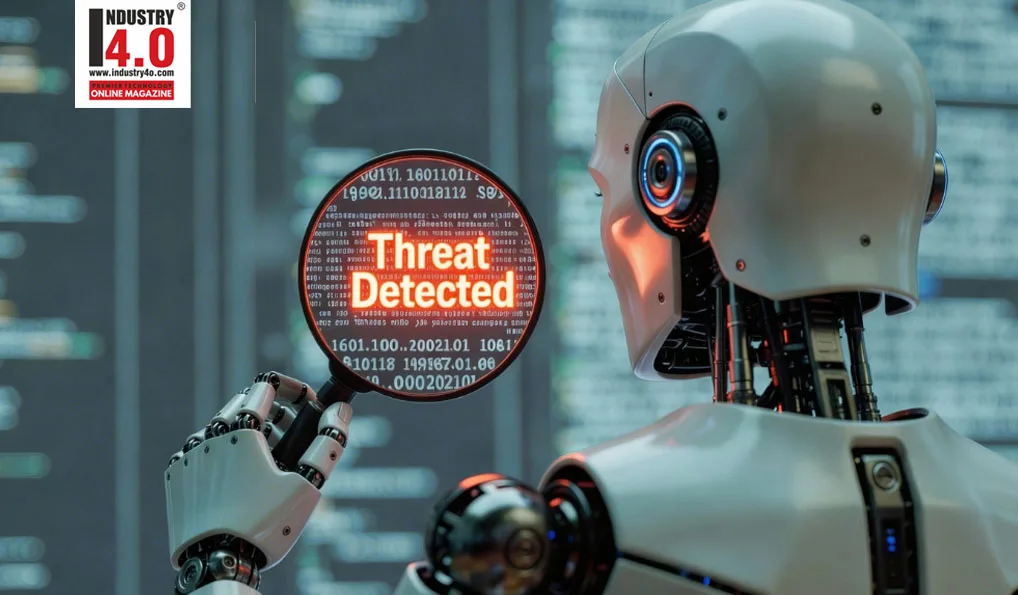
Artificial intelligence is reshaping cyber defence by helping organisations detect abnormal behaviour, prioritise alerts, automate investigations and respond at machine speed. At the same time, adversaries are using AI to accelerate reconnaissance, craft convincing social engineering, mutate malware and exploit identity, cloud and third-party weaknesses. A smarter cyber defence model therefore requires more than new tools, it needs trusted data, strong governance, human oversight, measurable outcomes and continuous adaptation.

The cyber threat landscape has moved from reactive incident handling to intelligence-led, AI-augmented defence. Industry analysis highlights a rapid rise in supply-chain compromise, exploitation of trusted identities, cloud misconfiguration, AI-enabled social engineering and attacks that move from initial access to business impact in hours or minutes. Security operations centres are increasingly adopting AI-powered detection, automated triage, behavioural analytics, XDR, UEBA, SOAR and security copilots to reduce alert fatigue and shorten response times.
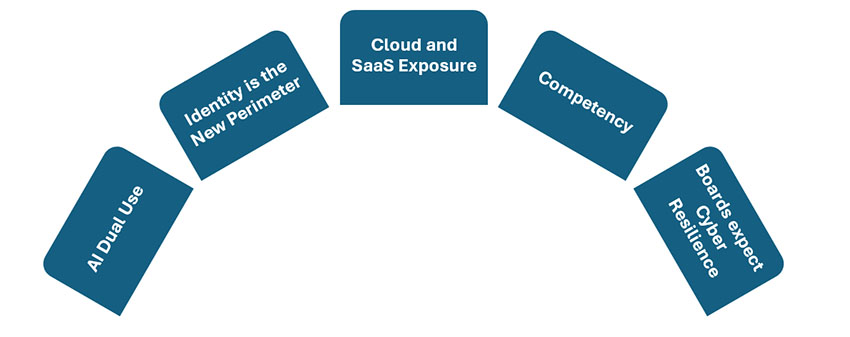
• AI Dual Use: Defenders use it for anomaly detection and response, while attackers use it for phishing, malware mutation and automated attack chaining.
• Identity is the New Perimeter: Compromised credentials, token theft and excessive privileges are central to modern intrusions.
• Cloud and SaaS Exposure: They are expanding multi-cloud environments, APIs, unmanaged assets and third-party integrations increase attack surface complexity.
• Competency: Skills shortages, high alert volumes & fragmented tools make manual defence unsustainable.
• Boards expect Cyber Resilience: cyber defence is now measured by operational continuity, recovery speed, regulatory confidence and trust preservation.
Cybercriminals are increasingly leveraging automation, artificial intelligence, and advanced attack techniques to launch ransomware campaigns, phishing attacks, insider threats, credential theft, supply chain compromises, and advanced persistent threats (APTs). Security Operations Centres (SOCs) are overwhelmed by millions of daily security events, resulting in alert fatigue, delayed response times, and increased operational costs.
As a result, organizations are rapidly investing in AI-powered cybersecurity solutions to improve detection accuracy, reduce response times, automate repetitive tasks, and enhance overall cyber resilience.
Traditional detection models depend heavily on signatures, static rules and manual correlation. These approaches remain useful for known threats, but they struggle against polymorphic malware, living-off-the-land techniques, insider risk, credential misuse and AI-generated attacks.
 Key Risks and Challenges in securing the Data:
Organizations face several critical challenges that make traditional security approaches insufficient:
• Increasing attack sophistication and frequency.
• Growing attack surfaces across cloud, hybrid, and multi-cloud environments.
• Shortage of skilled cybersecurity professionals.
• High volumes of false-positive alerts.
• Limited visibility across complex digital ecosystems.
• Rapidly evolving malware and ransomware variants.
• Insider threats and privileged access misuse.
• Regulatory and compliance pressures.
• Extended dwell times before threats are detected.
• Fragmented security tools and disconnected data sources.
These challenges create a need for intelligent, adaptive, and scalable security capabilities that can continuously learn and evolve alongside emerging threats.
Modern adversaries adapt quickly, blend into normal business activity and exploit gaps across endpoint, identity, network, cloud and application layers. AI-driven detection improves defence by learning behavioural baselines, correlating weak signals and identifying suspicious patterns before they escalate into major incidents.
Core AI-Based Threat Detection and Response Models:
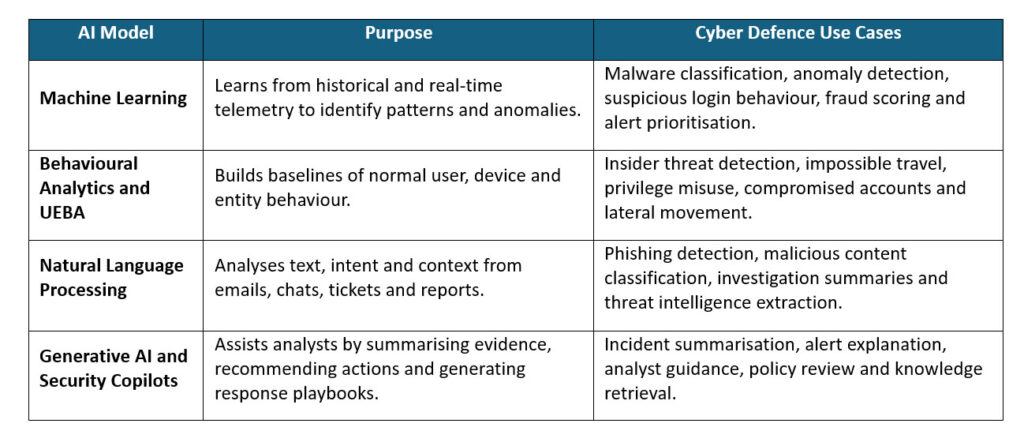
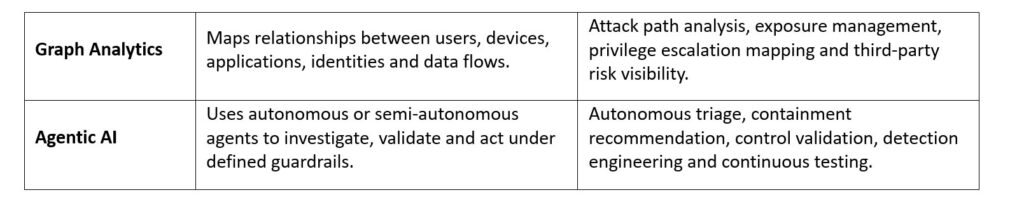
 AI has become a foundational capability within modern cybersecurity operations, enabling organizations to detect, investigate, and respond to threats at scale. Core AI-driven security models include anomaly detection, behavioural analytics, predictive threat intelligence, automated incident response, and generative AI-assisted security operations. These models leverage machine learning, deep learning, natural language processing, and graph analytics to identify patterns that traditional rule-based systems may miss.
As adoption matures, leading enterprises are shifting from isolated AI use cases toward integrated, platform-based approaches that combine human expertise with AI-driven automation to improve resilience, operational efficiency, and overall security outcomes.
Industry Best Practices:
Some of the key industry best practices for securing the data and reducing AI threats –
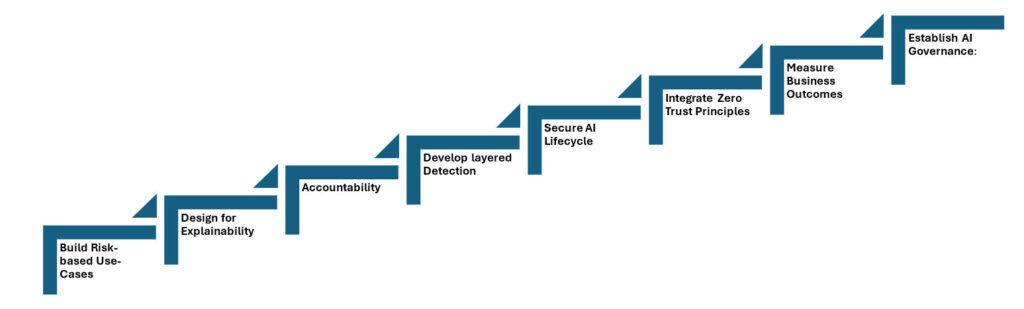
• Build Risk-based Use-Cases: Prioritise high-value areas such as phishing, ransomware, identity compromise, cloud misconfiguration and data exfiltration.
• Design for Explainability: Ensure alerts include evidence, context, confidence levels and recommended actions.
• Accountability: Automate repetitive actions but require human approval for high-risk containment and legal or regulatory decisions.
• Develop layered Detection: Combine signatures, behaviour analytics, threat intelligence, deception, vulnerability context and anomaly detection.
• Secure AI Lifecycle: Protect training data, model access, prompts, APIs, logs and deployment pipelines.
• Integrate Zero Trust Principles: Continuously verify identities, enforce least privilege and monitor session behaviour.
• Measure Business Outcomes: Track mean time to detect, mean time to respond, containment time, false positives, coverage against MITRE ATT&CK and recovery readiness.
• Establish AI Governance: Define ownership, acceptable use, model validation, data retention, audit trails and periodic review.

Cyber defence will be shaped by agentic security operations, AI-versus-AI defence, identity-led detection, continuous exposure management, secure AI governance, and cyber resilience by design. Organisations will need to move beyond traditional monitoring and build adaptive security models that can detect AI-generated threats, protect AI systems themselves, prioritise risk in real time, and respond faster with human-controlled automation.The future of cyber defence will depend on trusted AI, strong identity controls, continuous validation, explainable decisions, and resilient operating models that help organisations survive increasingly automated, intelligent, and fast-moving cyberattacks.
About the Author :

Ms. Kavitha Srinivasulu
CCISO | DPO| DTO| CISA | CRISC | CISM | CGEIT | PCSM | IAPP AIGP | ISO42001: LA
Program Director: Cybersecurity & Data Privacy
Tata Consultancy Services

Ms. Kavitha Srinivasulu is an Award winning Technology Leader.
Ms. Kavitha Srinivasulu is a Senior Cyber Risk and Resilience executive with over 22 years of global leadership experience advising Boards and Executive Committees across Financial Services, Healthcare, Retail, Technology, and regulated industries.
Ms. Kavitha Srinivasulu has delivered and led large-scale, regulator-driven cybersecurity, AI driven, PCI, and SOC transformations for Tier-1 banks, global healthcare organisations, and highly regulated enterprises operating across the UK, EU, USA, APAC, and ANZ.
Ms. Kavitha Srinivasulu is a trusted advisor to Boards, C-suite, regulators, and global enterprises, consistently delivering resilient, compliant, and scalable cyber operating models.
Ms. Kavitha Srinivasulu is an Advisory Member in National Cyber Defence Research Centre (NCDRC)

Ms. Kavitha Srinivasulu is a Board Member of Women in CyberSecurity (WiCyS) India

Ms. Kavitha Srinivasulu is an Executive Committee Member at CyberEdBoard Community

Ms. Kavitha Srinivasulu is an ambassador at ISAC
Ms. Kavitha Srinivasulu is Bestowed with the following Licenses & Certifications
https://www.linkedin.com/in/ka
https://www.linkedin.com/in/ka
Ms. Kavitha Srinivasulu can be contacted at :
Disclaimer :
“The views and opinions expressed by Ms. Kavitha Srinivasulu in this article are solely her own and do not represent the views of her company or her customers.”
Also read Ms. Kavitha’s earlier article: