
“Emerging Cyber Security Trends in 2026 : AI, Identity, and the New Attack Frontier”
As we are nearing 2026, the cyber security landscape is undergoing rapid evolution, fuelled by technological advancements, emerging AI transformation and increasingly sophisticated cyber threats. Let’s dive deep into the most notable emerging trends in cyber security for 2026, emphasizing the profound impact of artificial intelligence (AI), the crucial importance of identity management, and the expansion of the attack surface into previously unexplored areas.
Technological innovation is reshaping the fabric of cyber security. Artificial intelligence, machine learning, quantum computing, and the proliferation of connected devices are revolutionising both defensive and offensive capabilities. While these advances offer remarkable opportunities for automation, threat detection, and rapid response, they also introduce new vulnerabilities and attack vectors. The pace of change demands that cyber security teams remain agile, continually updating their skills and tools to keep pace with the latest developments.

The future of cyber security extends beyond traditional boundaries. Organisations must proactively address emerging risks such as quantum threats, deepfake technologies, and the exploitation of artificial intelligence. Additionally, the regulatory landscape is evolving, with stricter data privacy laws and compliance requirements. Proactive risk management, regular security assessments, and investment in employee training will be essential to staying ahead of the curve and building organisational resilience.
The Rise of Artificial Intelligence in Cyber Security
Artificial intelligence has emerged as a double-edged sword in the realm of cyber security and that has been discussed frequently across all round tables. On one side, AI-powered tools are significantly enhancing the capabilities of defenders, enabling them to detect, analyse, and respond to threats with uncommon speed and precision. Machine learning models can sift through massive datasets to identify anomalies, automate incident responses, and even predict future attacks based on historical data. Contrarywise, cybercriminals are exploiting AI to automate their attacks, increase the identity, create highly convincing phishing campaigns, and evade traditional security measures.
Looking ahead to 2026, we anticipate a notable increase in the deployment of AI-driven security solutions, including autonomous threat hunting, intelligent deception technologies, and adaptive authentication systems. However, this advancement also necessitates heightened vigilance against AI-generated threats, such as deepfake-based social engineering and AI-assisted malware. As AI continues to evolve, both defenders and attackers will need to adapt their strategies to navigate this rapidly changing landscape.
Identity as the New Perimeter
In the era of cloud computing and distributed workforces, the concept of a fixed network perimeter has lost its significance. Instead, identity around users, devices, and service accounts has emerged as the central pillar of enterprise security and adapting to zero trust. Malicious actors increasingly target credentials and identity systems, recognising that breaching identity controls can grant access to a wide array of resources to influence. As a result, robust identity protection is now vital, with digital identity serving as the gateway to critical information, applications, and infrastructure, the need for investing time and effort on this area has become the emerging demand in this new threat landscape.
Some of the places to invest includes –
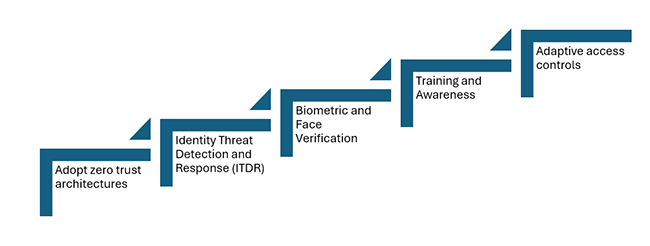
Biometric authentication, Face identity verification, behavioural analytics, and adaptive access controls will become more prevalent, aiming to minimise the risk of credential theft and account compromise. The focus will shift from defending networks to safeguarding digital identities, with increased investment in identity threat detection and response (ITDR) solutions.
By embracing these measures, cybersecurity professionals and IT leaders can position their organisations to meet the evolving challenges of a perimeter less digital world, safeguarding assets and ensuring operational resilience well into 2026 and beyond.
The Expanding Attack Surface: New Frontiers
The digital landscape is undergoing a rapid transformation, driven by the propagation of Artificial Intelligence, Internet of Things (IoT) devices, the integration of operational technology (OT), and the emergence of smart infrastructure. As organisations accelerate their adoption of these technologies, the digital attack surface is increasing with potential vulnerabilities that expands dramatically.
 For cybersecurity professionals and IT leaders, this evolution presents both unprecedented opportunities and urgent challenges, as adversaries exploit new vectors to target critical systems and infrastructure. Moreover, the convergence of cyber and physical security means that attacks may have substantial, real-world impacts. For example, ransomware targeting bank systems, healthcare platform, and autonomous vehicles is raising severe consequences for public safety and trust.
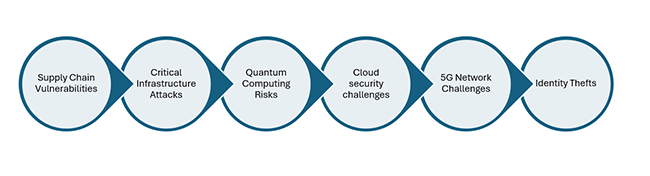
Some of the key challenges that’s raising in recent past –
Key Recommendations for Organisations
Invest in AI-driven security tools: Leverage the power of AI to automate threat detection, response, and predictive analytics, while staying informed about adversarial AI techniques.
Prioritise Secure-by-Design Principles: Integrate security into the development and deployment of IoT and OT devices, ensuring robust authentication, encryption, and update mechanisms.
Strengthen identity management: Adopt zero trust principles, implement multi-factor authentication, and monitor for identity-based threats using advanced analytics.
Secure the expanding attack surface: Conduct regular risk assessments of IoT, OT, and supply chain environments, and collaborate with partners to address shared vulnerabilities.
Enhance Supply Chain Security: Conduct rigorous vetting of suppliers, enforce contractual security standards, and monitor third-party risks continuously.
Monitor regulatory developments: Stay abreast of evolving data protection and cyber security regulations to ensure compliance and best practice adoption.
Foster a culture of cyber resilience: Provide ongoing security awareness training, develop incident response plans, and encourage collaboration across business units.
Implement Zero Trust Architecture: Assume that no device or user is inherently trustworthy, and continuously verify access at every stage.
Develop Incident Response Plans: Establish comprehensive procedures for detecting, responding to, and recovering from cyber-physical attacks, with an emphasis on cross-functional collaboration.
Simulated Exercises: Conduct drills and simulations to test awareness and readiness for regulatory-driven scenarios, such as data breach notification.
Training and Awareness: Run focused campaigns on emerging threats (e.g., phishing, ransomware) and regulatory updates, using posters, emails, and intranet resources.
The expanding digital attack surface presents a difficult challenge for cybersecurity professionals and IT leaders. The rapid adoption of AI, IoT, OT, and smart infrastructure, coupled with emerging technologies like quantum computing and 5G, demands a proactive and holistic approach to risk management. By strengthening security across supply chains, critical infrastructure, and cyber-physical systems, organisations can safeguard their operations and mitigate the real-world impacts of digital attacks. The urgency to act has never been greater; those who anticipate and address these risks will be best positioned to thrive in the hyper-connected world of 2026 and beyond.

Conclusion
The year 2026 promises to be the moment of evolution in cyber security space trying to adapt and managing emerging risks and growing in digital transformation. The digital environment in which organisations operate is undergoing transformative shifts, driven by the convergence of advanced technologies and increasingly resourceful adversaries. To succeed in this dynamic landscape, organisations must adopt forward-thinking strategies that address the challenges of today while anticipating the risks of tomorrow.
By embracing artificial intelligence responsibly, reinforcing identity management, and proactively confronting new and emerging risks, organisations can enhance their resilience and safeguard their digital future. The journey ahead demands vigilance, adaptability, and a commitment to continuous improvement.
About the Author :

Ms. Kavitha Srinivasulu
CCISO | DPO| DTO| CISA | CRISC | CISM | CGEIT | PCSM | IAPP AIGP | ISO42001: LA
Program Director: Cybersecurity & Data Privacy
Tata Consultancy Services

Ms. Kavitha Srinivasulu is an Award winning Technology Leader.
Ms. Kavitha Srinivasulu is a Senior Cyber Risk and Resilience executive with over 22 years of global leadership experience advising Boards and Executive Committees across Financial Services, Healthcare, Retail, Technology, and regulated industries.
Ms. Kavitha Srinivasulu has delivered and led large-scale, regulator-driven cybersecurity, AI driven, PCI, and SOC transformations for Tier-1 banks, global healthcare organisations, and highly regulated enterprises operating across the UK, EU, USA, APAC, and ANZ.
Ms. Kavitha Srinivasulu is a trusted advisor to Boards, C-suite, regulators, and global enterprises, consistently delivering resilient, compliant, and scalable cyber operating models.
Ms. Kavitha Srinivasulu is a Board Member of Women in CyberSecurity (WiCyS) India

Ms. Kavitha Srinivasulu is an Executive Committee Member at CyberEdBoard Community

Ms. Kavitha Srinivasulu is an ambassador at ISAC

Ms. Kavitha Srinivasulu is Bestowed with the following Licenses & Certifications :
https://www.linkedin.com/in/ka
https://www.linkedin.com/in/ka
Ms. Kavitha Srinivasulu can be contacted at :
Disclaimer :
“The views and opinions expressed by Ms. Kavitha Srinivasulu in this article are solely her own and do not represent the views of her company or her customers.”
Also read Ms. Kavitha’s earlier article: