
Swarm Intelligence in Collective Decision-Making & Problem-Solving
Abstract: Swarm intelligence, inspired by the collective behaviour of natural systems such as ant colonies, bird flocks, and fish schools, has emerged as a promising paradigm for addressing complex problems in various domains. This paper synthesizes the existing literature on swarm intelligence principles and their applications in organizational leadership, decision-making, and problem-solving. The review studies in this paper demonstrate the effectiveness of swarm intelligence in enhancing decision-making agility, fostering collaboration and knowledge sharing, promoting adaptive and inclusive leadership, and driving organizational resilience and success. Drawing on diverse examples from both theoretical research and practical applications, we explore how organizations can leverage swarm intelligence principles to navigate uncertainty, foster innovation, and achieve sustainable growth. Insights from this review contribute to a deeper understanding of swarm intelligence as a powerful tool for enhancing organizational effectiveness and leadership in today’s dynamic and rapidly changing business environment.

Introduction
Swarm intelligence (SI), inspired by the decentralized and self-organizing behaviors of biological systems such as ant colonies, bird flocks, and fish schools, has emerged as a powerful paradigm for collective decision-making and complex problem-solving. Originally conceptualized within cellular robotic systems, SI has evolved into a multidisciplinary framework spanning artificial intelligence, healthcare, robotics, and organizational management. This paper synthesizes foundational theories, computational models, and contemporary applications of SI, with particular emphasis on its implications for leadership, organizational dynamics, and adaptive decision architectures. Through an integrative literature review, the study examines algorithmic models such as Ant Colony Optimization and Particle Swarm Optimization, alongside Artificial Swarm Intelligence systems that amplify human collective judgment in high-stakes domains such as medical diagnostics and financial forecasting. Empirical findings indicate that swarm-based systems enhance decision accuracy, reduce cognitive bias, and increase responsiveness in volatile environments. The paper further conceptualizes swarm intelligence as a leadership framework characterized by decentralization, collaborative problem-solving, inclusivity, and emergent coordination. Practical applications across supply chain management, healthcare, smart infrastructure, human resource development, and crisis management are examined to illustrate operational feasibility. While the benefits of swarm-based governance structures are significant, challenges including ethical oversight, algorithmic bias, implementation barriers, and cultural variability warrant careful consideration. The study concludes that swarm intelligence provides a robust theoretical and practical foundation for enhancing organizational resilience and sustainable performance in complex, rapidly evolving environments.
Compelling Paradigms
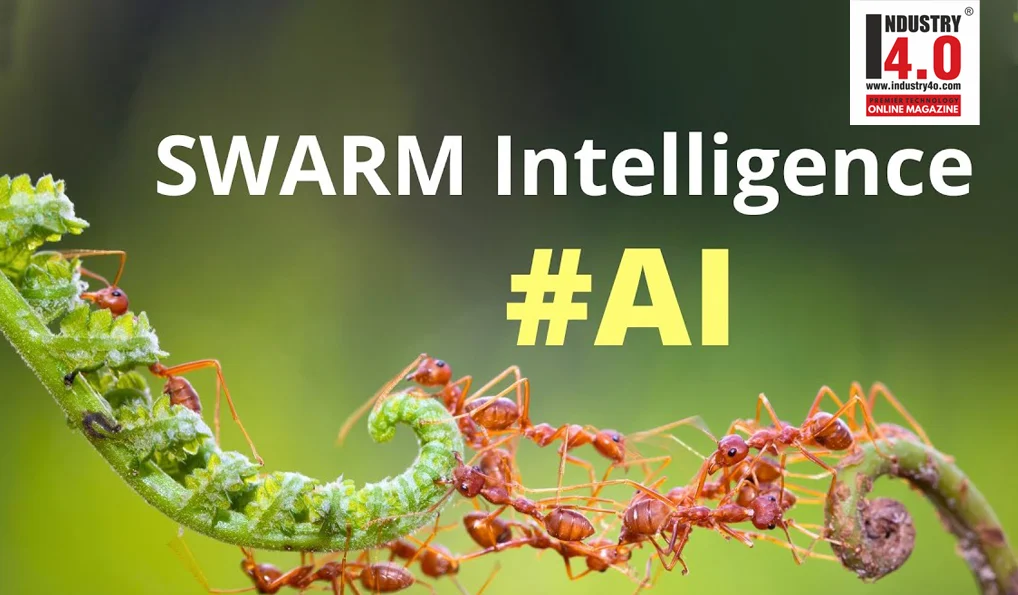
Swarm intelligence represents one of the most compelling paradigms in contemporary thinking about collective decision-making and complex problem-solving. Inspired by the coordinated behavior of ant colonies, bird flocks, fish schools, and other decentralized biological systems, swarm intelligence demonstrates how simple agents, operating under local rules and without centralized control, can produce sophisticated and adaptive global outcomes. Originally introduced by Gerardo Beni and Jing Wang in 1989 in the context of cellular robotic systems, the concept has evolved into a powerful interdisciplinary framework influencing artificial intelligence, organizational leadership, robotics, healthcare, and management sciences.
At its core, swarm intelligence is built upon decentralization, self-organization, and emergence. Individual agents follow simple interaction rules and respond to local information. Yet through feedback loops and dynamic adaptation, coherent, intelligent group behavior emerges. This principle, widely observed in nature, has been modeled computationally in simulations such as Craig Reynolds’ Boids model and in studies of self-propelled particle systems. These early insights laid the foundation for swarm-based metaheuristics including Ant Colony Optimization (ACO), Particle Swarm Optimization (PSO), and evolutionary algorithms. Such models have demonstrated remarkable efficiency in solving complex optimization problems involving scheduling, routing, clustering, and predictive modeling.
 As swarm intelligence matured within computational sciences, its conceptual expansion into Artificial Swarm Intelligence (ASI) marked a transformative shift. ASI connects human participants through real-time swarming algorithms, enabling them to converge dynamically on collective decisions that frequently outperform individual judgments. Research led by Louis Rosenberg has demonstrated that human swarms can significantly amplify diagnostic accuracy, forecasting performance, and business decision-making outcomes. Particularly striking are studies in medical radiology, where interconnected groups of physicians interpreting chest X-rays and MRI scans achieved measurable reductions in diagnostic errors and improvements in accuracy compared to traditional independent review methods. These findings highlight a crucial insight: properly structured collective intelligence can surpass even highly trained individual expertise.
However, the technological and clinical promise of swarm intelligence is accompanied by important considerations. Issues such as algorithmic bias, data privacy, regulatory oversight, and ethical accountability must be addressed carefully in high-stakes domains such as healthcare. Swarm-based systems do not eliminate human judgment; rather, they structure and amplify it. Ensuring transparency, fairness, and traceability remains essential as these systems are integrated into institutional practice.
Beyond computational optimization and healthcare, swarm intelligence has also influenced creative and artistic domains. Research into swarm grammars and swarmic art demonstrates how stochastic swarm algorithms can generate unique sketches, paintings, and visual compositions by mimicking exploration–exploitation balances found in nature. By combining localized search mechanisms with global pattern formation, these models create iterative artistic interpretations that resemble cognitive attention mechanisms. Such work illustrates that swarm intelligence is not merely a technical tool; it is a broader epistemological lens for understanding distributed creativity and emergent structure.
The evolutionary trajectory of swarm intelligence reflects a rich interdisciplinary journey. Observations of ants, bees, and termites first revealed that complex collective outcomes could arise without centralized command structures. Researchers such as Deneubourg and Bonabeau formalized underlying principles including decentralized decision-making, positive and negative feedback, self-reinforcement through pheromone signaling, and threshold-based commitment. Computer scientists then translated these principles into optimization algorithms capable of navigating high-dimensional problem spaces. Over time, swarm intelligence expanded into robotics, telecommunications, traffic systems, finance, and organizational management. Swarm robotics, in particular, demonstrated how multiple autonomous machines could coordinate exploration, search-and-rescue, and environmental monitoring tasks with robustness and scalability.
In the realm of organizational leadership and management, swarm intelligence offers a profound shift from hierarchical command-and-control structures toward adaptive, distributed leadership models. Modern organizations operate in volatile, uncertain, complex, and ambiguous environments. Traditional centralized decision structures often struggle under such dynamism. Swarm principles propose that resilience emerges when decision authority is distributed, communication channels are open, and local expertise is empowered. Research on collective intelligence and the “wisdom of crowds” supports this notion, demonstrating that diverse groups frequently outperform homogenous expert panels when decision processes are structured effectively.
Organizations that apply swarm-inspired practices tend to emphasize decentralized decision-making, rapid feedback loops, and iterative prototyping. Agile methodologies in technology firms exemplify this approach. Cross-functional teams collaborate autonomously, adjusting direction based on real-time data and stakeholder feedback. In such systems, leadership becomes facilitative rather than directive. Leaders cultivate environments that enable interaction, coordination, and psychological safety rather than issuing prescriptive mandates.
Swarm intelligence also aligns strongly with contemporary leadership paradigms such as adaptive leadership, inclusive leadership, and shared leadership. In adaptive contexts, leaders embrace uncertainty and treat experimentation as learning rather than failure. Inclusive leadership recognizes that diversity strengthens collective intelligence by broadening the cognitive solution space. Shared leadership distributes authority, allowing expertise to determine influence dynamically rather than relying strictly on positional hierarchy. These principles echo natural swarm behaviors, where no single ant directs the colony, yet colony-level intelligence thrives.
Human Resource Management further illustrates the practical application of swarm principles. Talent acquisition can benefit from collective evaluation models that incorporate multi-stakeholder input and predictive analytics. Training and development programs can be co-created through peer learning networks. Performance evaluation systems increasingly adopt 360-degree feedback frameworks that mirror swarm-inspired decentralized input mechanisms. Workforce planning, succession management, and employee engagement strategies all benefit when collective insight is structured and harnessed systematically.
Real-world applications underscore the operational viability of swarm intelligence. In traffic management, adaptive signal systems dynamically respond to real-time vehicle flows. In supply chain logistics, large retail and e-commerce firms use swarm-based algorithms to optimize routing and inventory placement. Financial institutions deploy swarm-inspired trading strategies to analyze dynamic market signals. Smart grids integrate distributed energy optimization models rooted in swarm coordination. Environmental monitoring increasingly leverages cooperative drone networks that collectively assess ecosystems. Disaster response agencies explore swarm robotics to navigate hazardous environments where centralized coordination would be too slow or vulnerable.

Within India and globally, corporations in information technology, manufacturing, telecommunications, and consumer goods have incorporated swarm-aligned principles into agile workflows, innovation platforms, and collaborative leadership development programs. These practices enhance organizational agility, knowledge sharing, and resilience while reducing bottlenecks inherent in rigid hierarchies.
Despite its transformative potential, swarm intelligence is not universally applicable without context. Organizational culture significantly influences its effectiveness. Resistance to decentralization, limited digital infrastructure, short-term evaluation metrics, and insufficient leadership commitment can constrain implementation. Additionally, measuring collective intelligence outcomes poses methodological challenges because constructs such as innovation capacity or collaboration effectiveness are multidimensional and dynamic. Longitudinal research remains essential to assess sustained impact over time.
Nevertheless, the trajectory of swarm intelligence signals a paradigm shift. It reframes leadership from individual authority to systemic orchestration. It redefines intelligence from isolated cognition to emergent coordination. It reconceptualizes problem-solving as iterative exploration across distributed networks rather than linear hierarchical planning. The fundamental insight is elegant yet powerful: when structured appropriately, decentralized agents interacting locally can generate extraordinary global solutions.
In conclusion, swarm intelligence represents a robust and evolving framework for enhancing decision-making, leadership effectiveness, organizational resilience, and technological innovation. Drawing from biology, artificial intelligence, complexity theory, and management science, it provides a scientifically grounded yet practically adaptable model for navigating modern complexity. As research deepens and interdisciplinary integration expands, swarm intelligence will likely continue shaping the future of collective problem-solving and organizational design. Its promise lies not merely in algorithms or robotics but in reimagining how humans collaborate, adapt, and lead in an increasingly interconnected world.
About the author:

Prof Dr. C. Karthikeyan
Professor & Asst Dean – KCT-Business School,
Kumaraguru College of Technology

Prof Dr. C. Karthikeyan is Bestowed with the following Licenses & Certifications
https://www.linkedin.com/in/pr
Prof Dr. C. Karthikeyan can be contacted at :
LinkedIn | E-mail | E-mail (O) | Website | Orcid Id: 0000-0002-2018-8245
#swarmintelligence #leadership #decisionmaking #collaboration #adaptiveleadership #organizationalresilience #collectiveintelligence #innovation #problemsolving #diversity #inclusion #agility #knowledgesharing #teamwork #organizationaleffectiveness