

The Importance of Cybersecurity in the Age of Artificial Intelligence
In today’s digital age, cybersecurity is no longer just a technical concern—it is a vital part of our everyday lives. Almost everything we depend on, from banking and healthcare to communication and government services, relies on digital systems. While this digital transformation has made life faster and more convenient, it has also introduced serious risks.

With the rise of Artificial Intelligence (AI), the cybersecurity landscape has changed dramatically. AI has made both defence systems and cyberattacks more advanced, faster, and harder to predict. To truly understand this shift, it helps to look at how cybersecurity worked before AI and how it is evolving today.
Cybersecurity Before the Rise of AI
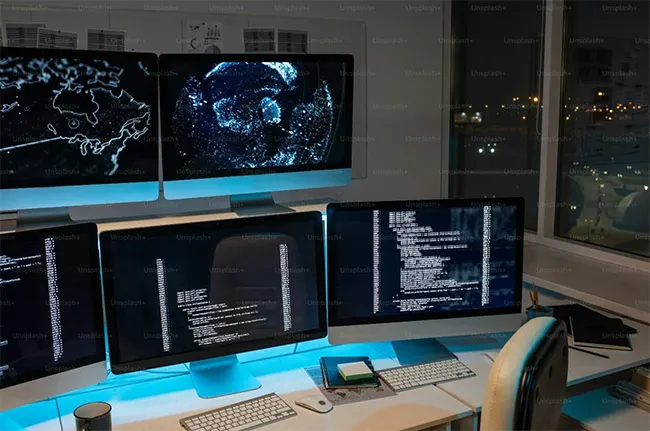
Before AI became widely used, cybersecurity systems were largely manual and reactive. Security depended heavily on human effort and predefined rules.
1. Manual Threat Detection
In the past, security teams had to monitor systems manually. They would analyse logs and look for suspicious activities themselves. This process was slow and often ineffective, as threats were usually discovered only after damage had already been done.
2. Signature-Based Protection
Traditional tools like antivirus software relied on known “signatures” of viruses. This meant they could only detect threats that had already been identified. New or unknown attacks, especially zero-day threats, often went unnoticed.
3. Slow Response Time
 Handling cyber incidents was a time-consuming process. Security teams had to investigate alerts one by one, which could take hours or even days. During this time, attackers had more opportunities to cause harm.
4. Limited Data Analysis
Earlier systems lacked the ability to process large volumes of data quickly. Detecting patterns across millions of events was extremely difficult, which meant many hidden threats were missed.
5. Simpler Cyberattacks
Cyberattacks were generally less sophisticated. Hackers relied on basic phishing emails or simple malware, and launching large-scale attacks required significant effort and expertise.
The Rise of AI in Cybersecurity
The introduction of AI has transformed cybersecurity into a smarter, faster, and more proactive field. However, it has also given cybercriminals powerful new tools.
We now live in what can be described as an “AI vs AI” cybersecurity environment, where both attackers and defenders are using advanced technologies.
How AI is Being Used for Cyberattacks
1. AI-Powered Phishing
AI can generate highly convincing phishing emails that mimic real people or organizations. These messages use correct grammar, natural tone, and even personal details, making them much harder to identify.
2. Deepfakes and Voice Cloning
AI can create realistic fake videos and cloned voices. Cybercriminals use these to impersonate executives, employees, or public figures, leading to fraud and identity theft.
3. Automated Hacking
AI allows hackers to scan systems automatically, identify vulnerabilities, and launch repeated attacks at a massive scale. These systems can even adapt based on how defences respond.
4. AI-Generated Malware
Modern malware has become more intelligent. It can change its own code to avoid detection, hide from traditional security tools, and spread efficiently across networks.
5. Smart Data Exploitation
AI can quickly analyse stolen data to identify valuable information, such as passwords or financial details. This enables attackers to target victims more effectively.
How AI is Strengthening Cyber Defense
Despite the risks, AI has also greatly improved cybersecurity defenses.
Modern systems use AI to:
➢ Detect unusual patterns and behaviours in real time
➢ Identify new types of malwares faster
➢ Predict potential threats before they occur
➢ Automate responses to attacks
➢ Analyse massive amounts of data instantly
These capabilities allow organizations to react within seconds instead of hours, significantly reducing damage.
From Reactive to Proactive Security
One of the biggest changes AI has brought is the shift from reactive to proactive cybersecurity.
In the past, action was taken only after an attack occurred. Today, AI can detect early warning signs and prevent threats before they happen. This proactive approach is critical in minimizing risks.
 The “AI vs AI” Cybersecurity Era
Today’s cybersecurity landscape is a continuous battle between:
➢ AI-powered attackers
➢ AI-driven defence systems
This dynamic environment means that success depends on speed, adaptability, and intelligence. Both sides are constantly evolving, making cybersecurity more complex than ever.
Why Cybersecurity Matters More Than Ever

As digital dependency grows, so do the risks. Cyber threats can lead to:
➢ Financial losses
➢ Identity theft
➢ Corporate data breaches
➢ Attacks on governments
➢ Disruption of critical infrastructure
Even a small vulnerability can result in large-scale damage, making cybersecurity essential for individuals and organizations alike.
Challenges in the AI-Driven World
Despite its advantages, AI also introduces new challenges:
➢ Rapid evolution of cyberattacks
➢ Difficulty in detecting deepfake content
➢ Increasing system complexity
➢ Data privacy concerns
➢ Shortage of skilled cybersecurity professionals
These challenges highlight the need for continuous innovation and awareness
Conclusion
Cybersecurity has come a long way—from manual, rule-based systems to intelligent, AI-driven solutions. While AI has significantly strengthened our ability to defend against threats, it has also made cyberattacks more powerful and sophisticated.
In today’s AI-powered world, cybersecurity is not optional. It is a fundamental necessity for protecting data, maintaining trust, and ensuring the safe functioning of modern society.
About the Author :

Ms. Deepthi Chatterjee
Industry Consultant/Delivery executive
IBM India Pvt. Ltd

Ms.Deepthi Chatterjee is Bestowed with the following Licenses & Certifications :
https://www.linkedin.com/in/de
Ms. Deepthi Chatterjee can be contacted at :
Also read Ms.Deepthi Chatterjee‘s earlier article :