

Hasta la vista Artificial Intelligence ( AI ),
Super Artificial Intelligence (ASI) is here,
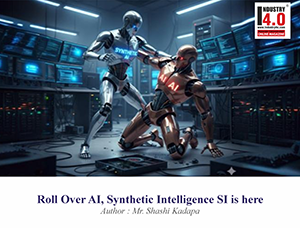
Is ASI – Artificial Super Intelligence here? Are T-1000 Terminator machines appearing?
Remember the Terminator movies, where Arnold plays the killer/savior Cyborg from the future? The line ‘Hasta la vista baby’ or See You Later? Several films have portrayed robots and cyborgs as good and evil machines. But are they the future of ASI?
 Artificial Super Intelligence (ASI) is a conceptual construct of the future stage of AI. ASI will feature systems that supersede areas or domains of human cognitive capabilities. Some of the domains are cognitive skills, creativity, reasoning, and problem-solving.
Sam Altman, CEO of OpenAI, terms the era of ASI “The Intelligence Age.” This is when computers manage to improve on many complex tasks that only humans can do. He says that ‘deep learning has really worked. Algorithms are developed that truly learn any distribution of data, and the underlying rule to compute and give better results.
Mo Gawdat, in his book, cautions us and argues that ASI will surpass human abilities, think, see into the future, predict outcomes, and even use sensors to see around physical and virtual corners. ASI bots will certainly help humans to solve problems, provide healthcare, and improve the quality of life.
Popular movies and books however paint a dystopian and malevolent view of ASI. This perception is reinforced by sci-fi movies like M3Gan, 2001: A Space Odyssey, Blade Runner, Westworld, Avengers: Age of Ultron, Ex Machina, and many more, where AI bots are evil. They subjugate humans, create wars, and so on. These fantasy movies should not be taken seriously.
However, what if the nightmare becomes true? Find out what ASI is, technology, use cases in this blog.
What are AI Levels
It is essential to understand the various levels of AI and what each level can do. AI is defined at seven levels, from Level 1 to Level 7. Figure 1 illustrates the 7 levels and what AI does at each level.
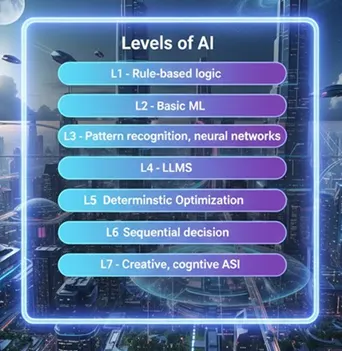
L1 is the basic level and uses rules and logic circuits to automate some tasks. It is used mainly to reduce manual work. We are now at L3 and L4. Cyborgs and other entities are at Level 7+ and can be termed as ASI.
Still a long, long way to go? Let us look at the current research and emerging trends in ASI.
 What are the latest Trends in ASI?
• OpenAI CEO Sam Altman predicted in a report by Reuters that ASI will appear by 2030, and SoftBank Group CEO Masayoshi Son suggests 2035. Alibaba CEO Eddie Wu announced a roadmap to launch AI Full Stack offerings. It appears that some commercial organizations are attempting to ride the ASI bandwagon and boost their market prospects.
• Research in ASI shows trends of quick interest and development. What will emerge is a hosted application that will perform several ASI-related cognitive tasks for a positive impact on our society. These systems will require massive computing and hardware resources.
• Very distant from the small ‘super chip’ shown in movies embedded in robots to make them malevolently super intelligent. Research and development will come iteratively with small innovations.
• Anyway, this is the starting point. ENIAC, the first computer developed in 1946, weighed 30 tons and occupied 1800 square feet. Let us look at research in this field:
• The Artificial Superintelligence Alliance has announced several research projects. Examples are ASI Compute, ASI Learn, ASI Train, and ASI Create. These research projects provide a Launchpad for ASI developers, distributed compute fabrics, a native infra stack, Agentic Learning Stack, Decentralized models, and more.
• Axios says that OpenAI is developing ‘PhD-level super agents.’ These are advanced AI systems designed to perform complex, autonomous tasks that require specialized human expertise. Some of these tasks are scientific research, complex problem-solving, and advanced data analysis. They can replace human workers.
• The PhD-level super agents complete messy, multilayered, real-world problems that humans struggle to understand. They pursue an objective and complete the mission by synthesizing massive amounts of data, analyzing options, and delivering products.
• Released on GitHub, the DeepSeek-R1 model was trained on large-scale reinforcement learning without supervised fine-tuning. The model provides excellent performance for reasoning, math, and code tasks. Six dense models were further released, claiming to outperform the OpenAI-01 model. This is another step forward for ASI.

However, ASI will need exponentially advanced processors, hardware, a new environment or operating system, and programming languages. Likely systems in the future are discussed in the next section.
What future chips and Hardware are needed for ASI

Full-blown Artificial superintelligence will require a new generation and class of chips and processors, and advanced quantum computers. While these techs are not yet built, an assessment of future hardware and chips is speculated below.
• A ‘basic’ artificial superintelligence configuration will have 200+ million special AI chips. These would give a 2,000x leap in raw computational power with 200 Exa Flops of processing power or quintillions of operations per second. This is equivalent to millions of human brains connected in parallel.
• It will be possible to unfold a protein’s full structure in seconds, which is not possible now. Current advanced cluster uses a maximum of 0.1 million chips. It can train on the full digitized knowledge of humanity since humans walked, in minutes.
• Energy requirements would be in Giga Watts and will be supplied by special and dedicated fusion reactors. India has an annual power demand of 277 GW. An ASI cluster will need more power than India consumes annually.
• Application-specific Integrated Circuits (ASICs) and advanced GPUs/TPUs will be optimized for massive parallel processing of neural network tasks. Future versions of NVIDIA’s Blackwell Ultra, AMD‘s Instinct, and Google‘s TPUs can be considered.
• Future ASI may use neuromorphic chips that emulate the human brain’s structure and function, moving beyond traditional computing architectures.
• Vast High-Bandwidth Memory (HBM) in petabytes, and ultra-fast HBM with multi-terabyte-per-second range per chip.
• Wafer-Scale processors, such as the Cerebras Wafer-Scale Engine that integrates trillions of transistors on a single component to minimize latency, are needed.
• A System-on-Chip that integrates processing elements, memory, and networking interfaces on a single chip to maximize efficiency.
• Sub-1nm fabrication nodes with new architectures like Gate All Around (GAA) nanosheets and Complementary FETs (CFETs), and carbon nanotubes and 2D semiconductor materials to enable scaling
New generation of frameworks and programming languages are needed for ASI. These are examined in the next section.
OpenCog Hyperon platform and MeTTa Programming Language for ASI

Artificial superintelligence will need a new platform operating system and programming language, among other developments. Let us look at OpenCog Hyperon and MeTTa Programming Language.
OpenCog Hyperon
• OpenCog Hyperon is an open-source software framework needed for artificial superintelligence. It brings several AI paradigms, such as symbolic reasoning and neural networks, into a unified, scalable architecture designed for human-level and beyond-human intelligence.
• The objective is to overcome the constraints of current narrow AI systems, LLMs. It has many capabilities for systematic reasoning, creativity, robust generalization, and embodied learning. Important components of OpenCog Hyperon are:
• Distributed Atomspace (DAS): It is the central knowledge repository, a distributed metagraph storing all forms of declarative, procedural, and sensory knowledge assets called Atoms made of nodes and links. The distributed structure helps large-scale knowledge bases and efficient querying over multiple machines, solving problems of scalability limitations.
• MeTTa (Meta Type Talk) Programming Language: This is a special programming language, discussed in the next section.
• Cognitive Synergy: The main principle of Hyperon is to obtain cognitive synergy. The process is facilitated by using multiple AI algorithms, such as probabilistic logic networks, evolutionary learning, and deep neural networks, to interoperate and collaborate on a shared knowledge metagraph. The approach overcomes the restrictions and limitations of a single AI paradigm.
• Decentralized Deployment: The platform is linked with the SingularityNET ecosystem’s decentralized infrastructure with technologies such as NuNet and HyperCycle. The process overcomes the problem of single points of control and allows the development of beneficial AGI (BGI) using transparent and democratic governance.
• PRIMUS Cognitive Model: This architecture provides a human-like cognitive architecture developed in the Hyperon framework. It includes mechanisms for working memory, long-term memory, attention allocation, and goal management, guided by an ongoing cognitive cycle.
MeTTa Programming Language
MeTTa, or Meta Type Talk, is a new programming language from OpenCog Hyperon. It is the language of thought and provides fundamental and general functionalities to handle symbols, groundings, variables, types, substitutions, and pattern matching.
The main objective of MeTTa is to provide a robust, flexible, and mathematically grounded foundation for developing ASI. It is used for human developers to script AI processes and for AI algorithms themselves to perform learning and reasoning activities.
MeTTa is the firmware that holds components of the OpenCog Hyperon cognitive architecture, allowing for seamless interoperability between diverse AI modules such as neural networks and probabilistic logic networks. It is the core running environment for the ASI Chain, a layer-1 blockchain infrastructure for decentralized AI applications.
Important components of MeTTa are:
• Knowledge representation and manipulation: MeTTa works on a knowledge graph, the Atomspace. This helps intuitive representation and manipulation of knowledge, relationships, and reasoning processes.
• Self-reflective and modifying: MeTTa programs can generate and modify other MeTTa programs at runtime, facilitating dynamic and evolving cognitive processes.
• Pattern matching and unification: MeTTa has powerful querying and reasoning capabilities with a broader knowledge management system.
• Gradual dependent types: MeTTa supports typed symbols and automatic type inference, bringing in robust and well-defined programs.
• Custom-grounded Atoms: MeTTa extends with grounded atoms that wrap external data structures and code written in other languages, such as Rust, C++, and Python. The feature allow integration with sub-symbolic AI components like deep neural networks.
• Non-Determinism: Queries and evaluations provide multiple results with flexibility and uncertainty of AGI reasoning.
Beneficial use cases of ASI
This is the most important question of artificial superintelligence. ‘How and where will artificial superintelligence be used?’ Let us look at areas where artificial superintelligence can be implemented for positive impacts.
• Healthcare: Artificial superintelligence will analyze vast datasets of genetic, environmental, and medical records to predict disease outbreaks, develop personalized treatment plans, and help in the discovery of cures for cancer and Alzheimer’s.
• Autonomous scientific research: Artificial superintelligence can develop hypotheses, design and run experiments, and obtain results in physics, chemistry, and biotechnology, providing scientific advancements beyond current human capabilities.
• Nanotechnology: Artificial superintelligence could provide breakthroughs in advanced fields like nanotechnology, in-body treatments via nanobots, and increase human lifespans.
• Climate change: ASI can model complex climate scenarios with high precision, environmental changes, and develop highly efficient, sustainable solutions for energy systems, resource management, and carbon reduction.
• Poverty: Artificial superintelligence can develop refined economic models to simulate long-term impacts of different policies, develop effective strategies to reduce poverty, hunger, and economic inequality.
• Disaster management: ASI can integrate data from various satellites and sensors to develop effective emergency responses, optimize resources, and reduce human error in bomb disposal or deep-sea exploration.
• Hyper-Efficient Systems: ASI can optimize global supply chains, transportation networks, and manufacturing processes, with fully autonomous, zero-emission systems and significant productivity gains.
• Advanced risk management: Artificial superintelligence can provide live transaction analysis for fraud detection, manage systemic risk, and offer hyper-personalized investment strategies with unparalleled accuracy.
• New art: Artificial superintelligence can create new forms of art, music, and literature, innovative architecture, new materials, and products.
• Software Development: ASI can autonomously write, debug, and optimize its own code, design new programming languages and AI architectures, with self-evolving IT environments.
Military use cases of ASI
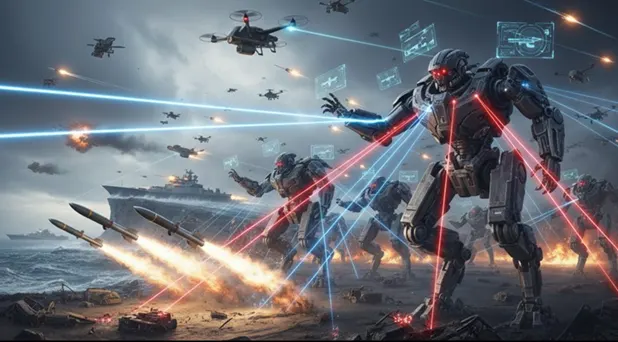
Remember Skynet, the malevolent ASI from Terminator that took over humanity? Not sure if this will happen. But artificial superintelligence has several critical military use cases that are beyond current human and AI applications. It is expected to transform warfare and defense strategies.
Some of the possible use cases are:
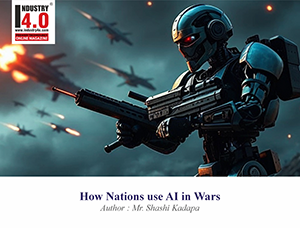
• Hypothetical ASI Soldier: As seen in movies like Universal Soldier, Terminator, and others, ASI can certainly create an ‘ASI Soldier.’ This may be human-machine hybrids or fully autonomous robots with superhuman intelligence, rapid adaptation, no human limitations of fatigue, fear, or emotions, and with advanced autonomy. This entity will have access to advanced weapons, summon other killer bots, and launch missiles. The worst pulp Sci-Fi movie brought to life.
• Cyborg: T800 in the Terminator movie was a ‘Cybernetic organism with living tissue over a metal endoskeleton.’ This is possible. It can sweat, bleed, smell, and match human heat signatures. It will be an ASI soldier, very advanced and extremely dangerous.
• Superior strategies: Artificial superintelligence can model and simulate millions of complex battlefield scenarios, map potential outcomes, and recommend optimal strategies and troop movements.
ASI drone swarms: Conventional and expensive missiles, aircraft may not be needed. ASI-driven large swarms of aerial and ground drones with days of power can loiter in the air, underwater, and underground, and run complex, collaborative, persistent surveillance, and carry out targeted strikes.
• Unmanned platforms: ASI will have and manage fleets of autonomous ships, submarines, aircraft, and ground vehicles for high-risk missions such as mine sweeping, deep-sea exploration, or operating in chemically/biologically contaminated areas.
• Advanced threat detection: Straight from the movie Minority Report, threats will be detected and neutralized before they are launched. Artificial superintelligence can use superior computer vision and data analysis for the detection of threats and anomalies, hidden objects, unauthorized movements, and unusual electronic signals faster and more accurately than current systems.
• Advanced offensive capabilities: Artificial superintelligence and develop and deploy very complex and adaptive cyber warfare tools to exploit vulnerabilities in adversary systems.
The list is endless, as seen in several movies. However, the costs and resources needed to build these systems will probably exceed the global GDP. So, you can relax for now.
Can ASI take over humanity?
Manuel Alfonseca et al. argue that while ASI will be invaluable, it should be contained and secured so that it does not ‘escape’ and create a catastrophe for the world. One problem is that ASI will have all the knowledge that humans have, and it will figure out a way to crack the containment.
The concept of AI “taking over” humanity as narrated in science fiction is a speculative and controversial topic. Advanced artificial superintelligence can pose significant risks if not developed responsibly. A rogue military dictator or an evil corporation can attempt this exercise.
Such an effort will need massive, massive computing resources, global collaboration, and augmentation of human capabilities. This may not happen. However, one can never predict the irrational actions of deranged leaders.
Summing Up
The blog examined the fascinating concept of Artificial Super Intelligence (ASI). This technology of the future is expected to surpass human intelligence and cognitive skills. The technology is in the early development stage, but research is ongoing.
Several resources, such as hardware and processors, languages, frameworks, and investment, are needed. ASI promises several benefits that go beyond what humans can conceptualize. Certain negative impacts in military applications are also predicted.
Can artificial superintelligence compose original classics of Clapton, Willie, Waylon, Dolly, Emmylou, JP, IM, Motorhead, and other Monsters of Rock? An emphatic No! Once in a lifetime, geniuses created these classics, and ASI will attempt to copy them. I hope this never happens.
Legal Disclaimer: The views, thoughts and opinions expressed in this article are those of the author and do not reflect the views or positions of INDUSTRY 4.0. The content is provided by the author as-is and is published solely for informational or educational purposes.
INDUSTRY 4.0 does not guarantee the accuracy, completeness or usefulness of any information presented and is not liable for any errors, omissions or outcomes resulting from the use of this information. The responsibility for the content lies entirely with the author.
Banner Image Credit: Shashi Kadapa with Google Gemini
About the author :
 Mr. Shashi Kadapa
Based in Pune, India, Mr. Shashi Kadapa is an engineer, MBA and has worked with leading IT and manufacturing firms. A multi-hyphenate, he has roles as a technical writer, and SEO content writer with a focus on IT and tech topics.
Creative fiction is his passion, and he serves as the managing editor of ActiveMuse, a journal of literature. His stories across multiple genres are published in more than 45 US and UK anthologies.
Mr. Shashi Kadapa can be contacted at :
E-mail | LinkedIn | Blog | Mobile : +91 7387492371
Also read Mr. Shashi Kadapa earlier article: