
Visual Inspection in Manufacturing Fails When You Treat It Like Software
The fastest way to make vision inspection work is to stop treating it like an AI feature—and start treating it like production infrastructure.
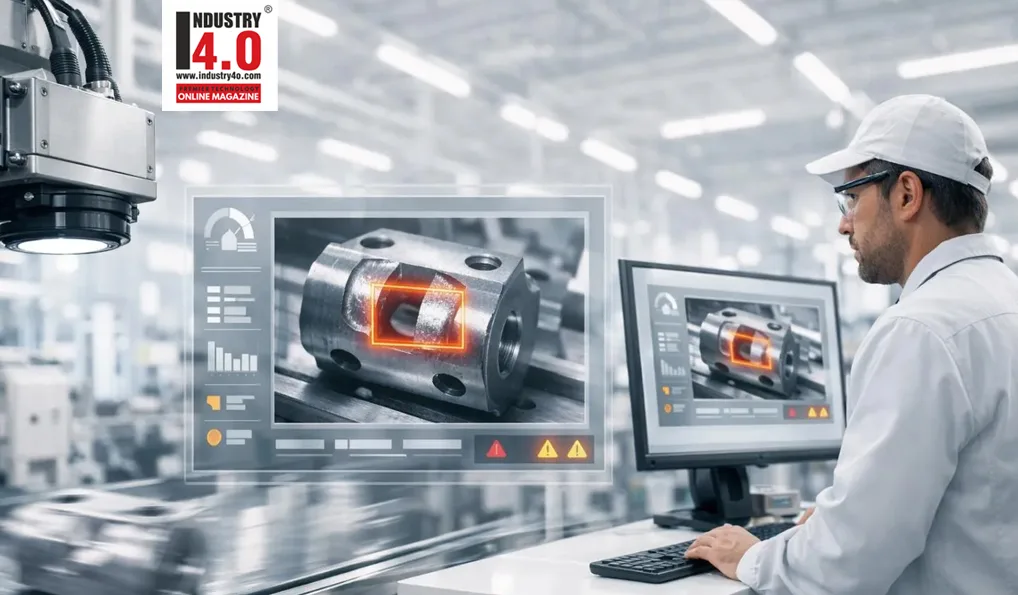
I’ve witnessed this scenario too many times: the model looks great—then the station collapses in week one. Not because the AI is “bad,” but because the real culprits are upstream and downstream: lighting drift, sloppy fixturing, rushed changeovers, brittle PLC handshakes, and workflows no one trusts.

Factories don’t care about demo accuracy. They care whether inspection survives production reality — shift after shift, line after line. In manufacturing, visual inspection isn’t a software project. It’s a production system.
And that distinction matters more than ever.
The industry has spent years optimizing defect detection accuracy. But factories don’t run on model accuracy alone — they run on reliability, integration, repeatability, maintainability, and operator trust.
A vision AI model that works in a controlled demo but fails during changeovers is not an AI success story — it’s a production liability.
The Real Challenge Is Not Detection — It Is Production Stability
Most quality teams have lived both extremes:
• Manual inspection that burns people out.
• traditional machine vision that works until reality changes.
Deep learning helps—but it doesn’t remove the factory constraints: vibration, partvariation, surface glare, tight takt time, frequent changeovers, and the non-negotiable requirement to integrate with controls.
Here’s how I think about it: visual inspection is a stack, and software is only one layer.
The Visual Inspection Stack (Beyond Software)
A production-grade inspection system typically depends on multiple interconnected layers:
Operations & Governance : Ownership, escalation paths, operator trust, and change management
Integration : PLC/MES/QMS connectivity, traceability, reject/rework loops, alarms
Deployment & Reliability : SAT readiness, uptime, calibration procedures, maintenance playbooks
Model & Decision Logic : Classification logic, thresholds, defect taxonomy
Data : Sampling strategies, labelling quality, edge-case handling, drift monitoring
Compute & Cameras : Edge hardware, triggering systems, timing synchronization, enclosures
Lighting, Optics & Mechanics : Illumination geometry, lensing, fixturing, motion control
 💡A simple rule often applies: if the foundational layers are unstable, software alone cannot compensate for upstream variability.
This is where many AI vision deployments encounter difficulties—not because the model fails, but because production environments are inherently dynamic.
Production Does Not Care About the Demo
On the shop floor, the expectations are straightforward:
- pass SAT
- sustain uptime
- survive changeovers
- avoid becoming a new operational bottleneck
If an inspection station cannot be trusted consistently across shifts, even high-performing models lose practical value. It won’t matter what your ROC curve looked like during evaluation.
Scaling inspection therefore requires more than deploying AI models. It requires deployment discipline: standardized mechanical design, calibration routines, acceptance criteria, maintenance workflows, integration logic, and operational governance.
Without that foundation, every deployment risks becoming a custom engineering exercise.
At scale, inspection systems stop being isolated AI projects and start becoming manufacturing infrastructure.

Detection Is Cheap. Action Is the Product.
The value of inspection is realized only when manufacturing systems can act on the result reliably.
Inspection-to-Action Flow
| Physical Flow | Digital Vision Flow | Manufacturing Action |
| Part presented and triggered | Image acquisition and processing | Cycle time maintained |
| Production variation enters system | Inference and thresholding | Pass / reject / hold decision |
| Defect detected | Defect classification and evidence generation | PLC signal, rework loop, alarms |
| Process drift occurs | Drift and performance monitoring | Maintenance, recalibration, corrective action |
Detection alone has limited value if it cannot drive reliable manufacturing action.
The real operational layer is everything that happens after inference: PLC handshakes, reject/rework logic, alarms, traceability, and reporting into MES/QMS, operator visibility, and process accountability.
And it has to be legible—defect categories must align with the control plan, evidence images must be understandable to operators, and metrics must drive action – not endless arguments between production and quality teams.
At scale, inspection systems are not evaluated only by model accuracy. They are evaluated by whether production teams trust them enough to run continuously.
Rethinking AI Inspection as Manufacturing Infrastructure
As AI adoption expands across manufacturing, the conversation is gradually shifting.
The question is no longer only: “Can AI detect defects?”
Increasingly, the more important question is: “Can the inspection system remain stable, maintainable, and operationally useful under real production conditions?”
That changes the way inspection systems need to be designed.
Experience from large-scale manufacturing deployments continues to reinforce the same lesson: successful inspection systems are rarely the result of models alone.
They depend on how imaging, mechanics, AI, deployment reliability, integration, traceability, and production workflows work together as a complete operational system.
At Jidoka Technologies, this perspective has been shaped through deployments across 180+ manufacturing lines and more than 300 million inspections per day across production environments.
Because ultimately, the objective is not only defect detection. It is enabling production environments to respond consistently, reliably, and at scale.
 About Author :

Mr. Sekar Udayamurthy
Founder & CEO,
Jidoka Technologies Pvt. Ltd.

Mr. Sekar Udayamurthy is the Founder and CEO of Jidoka Technologies, leading the integration of Artificial Intelligence, Machine Vision, and automation to revolutionize defect detection in manufacturing.
Mr. Sekar Udayamurthy works on deploying AI-powered visual inspection systems across manufacturing environments.
Mr. Sekar Udayamurthy’s work focuses on production-grade AI deployment, operational reliability, manufacturing integration, and scalable inspection infrastructure for Industry 4.0 applications.
Previously Mr. Sekar Udayamurthy contributed to large-scale digital engineering and application modernization initiatives as SBU Head at Cognizant, managing multimillion-dollar portfolios and cloud-native platform development.
Mr. Sekar Udayamurthy is passionate about technology, architecture, and fostering high-performance teams, consistently delivering impactful tech solutions aligned with strategic objectives.
Mr. Sekar Udayamurthy is Bestowed with the following Licenses & Certifications :
https://www.linkedin.com/in/
Mr. Sekar Udayamurthy is Bestowed with the following Patents :
https://www.linkedin.com/in/
Mr. Sekar Udayamurthy can be contacted at :
 About JIDOKA Technologies Pvt.Ltd :
Jidoka Technologies is an industrial automation leader specializing in “First-Time-Right” manufacturing through Vision AI solutions. Rooted in the Lean manufacturing principle of Jidoka (automation with a human touch), the company eliminates the traditional trade-off between production speed and quality. By combining deep learning with modular hardware, Jidoka enables factories to achieve near-perfect accuracy at extremely high throughputs.
Core Product Offerings :
Jidoka uniquely delivers product inspection(2D & 3D) and process guidance on a single platform:
KOMPASS™ (Product Inspection)
Unlike traditional rule-based vision systems, KOMPASS uses deep learning to detect micro-defects, anomalies, and non-conformances in real-time. It handles counting, sorting, classification, and label verification at speeds up to 12,000 parts per minute.
NAGARE™ (Process Guidance)
NAGARE focuses on process integrity through real-time digital verification of assembly steps. This “poka-yoke” (error-proofing) approach guides operators to prevent errors before they become defects, reducing rework by up to 35% and boosting productivity by 25%.
Industry Impact
Jidoka serves diverse sectors including Automotive, FMCG, Pharma, Electronics, and Logistics
Automotive:
The “HILDA” (Human-In-The-Loop) approach inspects cylinder blocks, processing over 1,000 images in 70 seconds and saving thousands of man-hours
FMCG & Logistics:
High-speed packaging line inspection ensures label accuracy and kit completeness, preventing costly recalls
General Manufacturing :
Hardware-agnostic AI integrates seamlessly with existing systems (Siemens, Omron), providing scalable quality control digitization
To Learn more about Jidoka Technologies Pvt. Ltd.:
Jidoka Technologies | AI Vision Inspection Solutions | Customer Stories
Jidoka Technologies can be contacted at: