
How Emerging & Growing India is Shaping itself for the Coming Decades
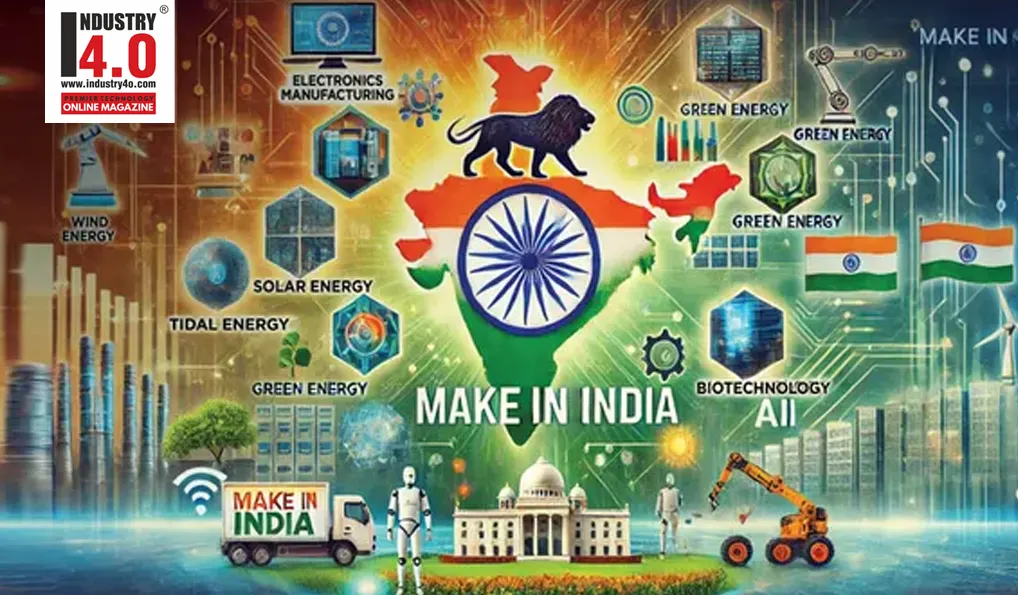
As the world grapples with geopolitical volatility and uncertain economic tides, India stands tall, emerging not just as a resilient player but as a beacon of hope for the future. With a projected GDP growth of 8.2%, India is carving its path to become a global economic powerhouse. Yet, the country’s success story is far from linear—there are multifaceted challenges and opportunities ahead, particularly in the realms of innovation, sustainability, and inclusive growth.

Key Trends Shaping India’s Future :
Resilient Growth Amid Global Challenges :
India’s economy is projected to grow robustly, with a per capita consumption reaching approximately $3,000 by 2050. While the per capita consumption for consumer goods is currently at $54, this offers immense room for growth, particularly in rural areas where women’s participation in the workforce has risen to 35-40%. This demographic shift holds the promise of increased economic activity and greater social equity.
Innovation and Intellectual Property (IP) :
India’s R&D and IP patent landscape must see dramatic growth if it is to emerge as a global leader in technology. Fostering a culture of innovation will be crucial as India aspires to lead in fields like AI, biotech, and semiconductors.
Inflation and Consumer Sentiment :
Controlling food inflation is essential. The subdued consumer demand in recent years signals the need for more nuanced fiscal and policy interventions to ensure that growth benefits reach all sections of society.
Private Equity and Mutual Funds :
Private equity (PE) investments have been one of the key growth engines for businesses, while the mutual fund sector is growing at 15%—outpacing traditional bank deposits and fixed deposits (FDs). This shift signals a growing investor confidence in the Indian market.
Financial Reserves and Currency Volatility :
With $650 billion in reserves, India is well-positioned to handle financial shocks. However, the looming depreciation of the rupee and the looming risk of the exchange rate crossing the 100/USD mark could be a silent tax on exporters and citizens alike.
 Strategic Challenges and Solutions :
Proactive Policy Management :
India must move beyond reactive policymaking and adopt a more strategic, anticipatory approach. Whether it’s negotiating tariffs or addressing geopolitical challenges, foresight and long-term planning are crucial to avoid the “firefighting” approach that hinders sustainable growth.
Global Trade and Negotiations :
India must strengthen its global negotiating position. While countries like Mexico and the U.S. have demonstrated an aggressive stance in renegotiating trade terms, India has often been seen as an adjustable, not indispensable, partner. To elevate its global status, India needs to leverage its market size and geopolitical importance to secure better trade deals.
The Role of Youth and Education :
India’s demographic advantage is undeniable—by 2050, the country is expected to have over 100 million high-net-worth individuals (HNWIs). However, the country must invest heavily in skilling, re-skilling, and up-skilling its workforce, particularly in emerging fields like AI, semiconductors, and renewable energy. This requires an overhaul of education systems, aligning them with future job market needs.
The Vision for India’s Economy in 2050 :
Digital Payments and Currency :
By 2030, digital payments in India are projected to exceed 80%, and the Digital Rupee could account for 25-30% of retail payments by 2040. India’s digital-first economy will serve as the backbone of its future growth, contributing significantly to GDP expansion from $4T to $30T.
AI and Wealth Management :
AI-driven models are expected to reduce non-performing assets (NPAs) by 40%, while the wealth management industry is set to evolve to cater to an increasing number of HNWIs. CXOs must balance technology adoption with ethical considerations, particularly in the areas of finance, healthcare, and retirement planning.
Sustainability and Green Growth :
India’s future economic growth will also be defined by sustainability. The country must aim for 50% of its energy needs to be met from renewable sources by 2050, while simultaneously advancing green financing initiatives to drive low-carbon growth.
A Comprehensive Action Plan for India’s Economy :
A – Access :
Ensure universal access to digital infrastructure, healthcare, education, and global markets. Bridging the urban-rural divide is crucial to fostering inclusive growth.
B – Backlogs :
Fast-track judicial, infrastructure, policy, and project backlogs to increase efficiency and development pace.
C – Costs & Corruption :
Reduce transaction costs and curb corruption through digitization, transparent procurement, and real-time audits. Transparency must be enforced at every level
D – Regulatory Delays :
Establish time-bound approvals, single-window clearances, and predictable policies to boost ease of doing business and attract global investment.

E – Employment :
Job creation must be a priority, particularly in manufacturing, MSMEs, green energy, and the digital economy.
F – Foreign Policy :
Strengthen strategic multi-alignment, leveraging India’s role as a bridge between the Global North and South to navigate geopolitical tensions.
G – Geopolitics :
India must use its demographic, economic, and diplomatic weight to counter supply chain risks and enhance regional stability.
H – Human Capital :
Skilling and up-skilling should be aligned with emerging technologies such as AI, semiconductors, and climate tech.
I – Infrastructure :
Build world-class infrastructure—roads, ports, logistics, and energy grids—to support India’s $5T+ economy aspirations.
J – Judicial Reforms :
Speed up justice delivery with tech-enabled courts and alternative dispute resolution systems.
K – Knowledge Economy :
Transition from a service-based economy to an IP-led knowledge economy, focusing on AI, deep tech, and biotech.
L – Logistics :
Improve logistics efficiency and bring down logistics costs to global benchmarks through multimodal integration and effective supply chain management.
M – Manufacturing :
Position India as the global manufacturing hub, leveraging the “Make in India” and “PLI” schemes to replace China as the world’s factory.
N – National Security :
Strengthen national security—cyber, space, maritime, and border security—amid rising global tensions.
O – Open Markets :
Pursue balanced trade policies, with strategic FTAs that protect domestic industries while expanding export opportunities.
P – Policy Stability :
Consistent, long-term government policies to build investor confidence and foster trust in the Indian market.
Q – Quality & Standards :
Establish global quality standards across manufacturing, education, healthcare, and governance.
R – Research & Innovation :
Increase R&D expenditure and foster academia-industry collaborations to boost innovation and IP certifications.
S – Sustainability :
Balance economic growth with sustainability by advancing green energy, climate action, and renewable financing.
T – Technology Adoption :
Rapid adoption of technologies such as AI, block chain, machine learning, and Industry 4.0 to maintain competitive advantage.
U – Urbanization :
Develop smart, inclusive cities with efficient transport, housing, and digital governance systems.
V – Vigilant Governance :
Data-driven, accountable, and citizen-centric governance should be prioritized in all levels of government.
W – Workforce Mobility :
Facilitate the movement of the Indian workforce, both domestically and globally, by recognizing acquired skills and promoting global employment opportunities.
X – Exports :
Expand high-value exports—particularly in electronics, defense, pharmaceuticals, and professional services—to diversify markets and reduce dependence on a few.
Y – Youth Dividend :
Invest in the education, entrepreneurship, and innovation capacities of India’s young population to harness its demographic dividend.
Z – Zero Tolerance for Inefficiency :
Implement zero tolerance for inefficiency, delays, and systemic leakages to fast-track India’s rise as a global economic leader.
Conclusion :
India stands at a transformative juncture in its journey to becoming a global economic leader. With a strategic focus on digital infrastructure, innovation, sustainability, and inclusive growth, the country has the potential to redefine its role in the global economy by 2050. As we navigate these challenges and opportunities, India must be agile, proactive, and committed to long-term vision.
 About the Author :

Mr. Jawahar Lalla
Technology & IT Consultant / Blogger/ Podcaster/ Digital Influencer
Mr. Jawahar Lalla is a seasoned Motivational Speaker, Industry Expert, and Professional Trainer.
Mr. Jawahar Lalla with over 40 years of extensive experience in the IT industry, brings a wealth of knowledge as a senior management executive, writer, blogger, and speaker.
Mr. Jawahar Lalla is also digital influencer having more than 2 Lakhs connects across social media and digital platforms.
Mr. Jawahar Lalla has contributed insightful articles to both Indian and international publications on industry-related topics.
Mr. Jawahar Lalla is frequently invited as a keynote speaker and panel judge at conferences and seminars, where his deep industry insights and leadership experience are highly valued.
Mr. Jawahar Lalla is a passionate reviewer, he has reviewed numerous books in the fields of technology and management.
Mr. Jawahar Lalla is also active as a blogger, podcaster, public speaker, and even a model.
Mr. Jawahar Lalla is a prolific co-author, he has contributed to more than 450 anthology books.
Mr. Jawahar Lalla interviews and podcasts are available on his YouTube channel: jawaharlalla3573.
Mr. Jawahar Lalla can be contacted at :
LinkedIn | YouTube | E-mail | E-mail2 | Mobile : +91 – 9819428307