
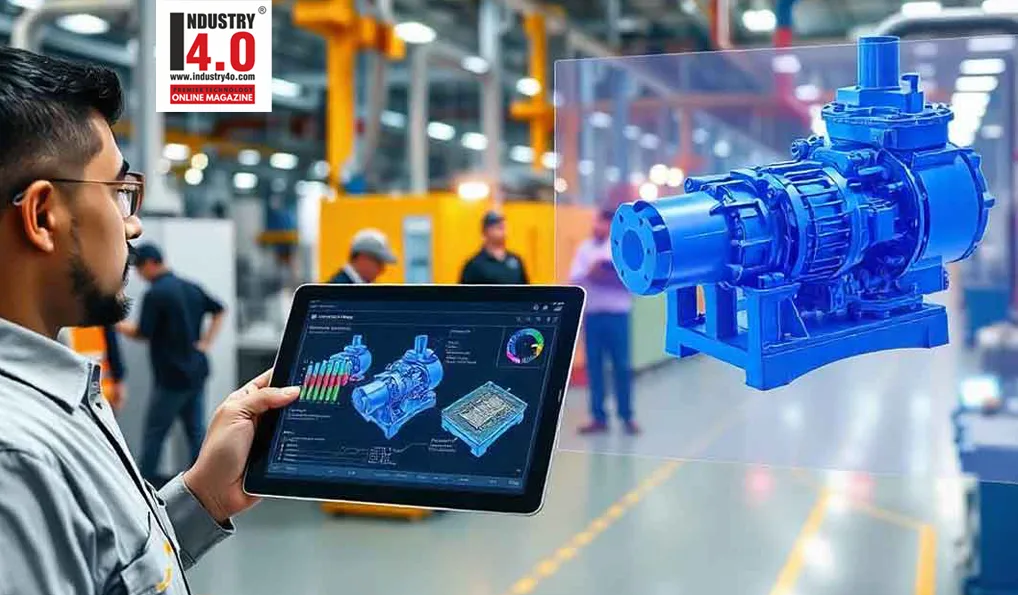
Digital twins: Test decisions in a virtual factory before you spend a rupee
Risky Decisions? So What if You Could Test Them First?
So what?
Because the most expensive failures in manufacturing today are not machine
breakdowns, they are decisions executed without understanding their full-system impact.
Every layout change, capacity ramp, or bottleneck “fix” carries hidden risk. The cost of
getting it wrong is measured not just in CapEx, but in lost throughput, missed deliveries,
and credibility erosion.

Digital twins change the equation by giving leaders something manufacturing has rarely
had:
A risk-free environment to test decisions before committing capital.
The mandate: eliminate guesswork, maximize confidence
Traditional manufacturing decisions are often made using:
- Historical data
- Experience and intuition
- Limited pilots on live production
This approach is inherently risky. Once a change is made on the shop floor, reversing it
is slow, costly, and disruptive.
Digital twin enabled decision-making flips this model:
- Decisions are tested virtually, not physically
- Scenarios are explored before execution
- Confidence replaces optimism
In simple terms:
- Traditional approach → “Let’s try and see.”
- Digital twin approach → “Let’s simulate and choose.”
That difference alone is worth millions.
What changed: digital twins are no longer offline simulations
Simulation is not new.
What’s new is real-time, bidirectional intelligence.
 Earlier generations of models were static and engineering-owned. Today’s digital twins
are:
- Continuously synchronized with live shop-floor dat
- Integrated with MES, planning, and equipment health
- Enhanced by AI and predictive logic
- Actively used by operations and leadership
They don’t just represent the factory.
They behave like it.
This evolution transforms digital twins from analytical tools into decision engines,
capable of answering:
“If we do this tomorrow, what happens next week?”
They don’t just represent the factory.
They behave like it.
This evolution transforms digital twins from analytical tools into decision engines,
capable of answering:
“If we do this tomorrow, what happens next week?”
Why decision testing matters more than optimization
Optimization improves existing performance.
Decision testing prevents avoidable mistakes.
In complex factories, changes rarely behave in isolation:
- A layout change improves flow, but shifts congestion downstream
- A bottleneck fix increases speed, but exposes upstream variability
- A capacity ramp meets demand, but destabilizes quality
Digital twins reveal second- and third-order effects before they become operational
problems.
This is where most traditional decision-making fails, not in intent, but in visibility.
Decisions that should always be tested in a digital twin
From real-world manufacturing transformations, some decisions are simply too risky to
execute blindly.
1. Factory layout changes
Physical layout changes are capital-intensive and hard to reverse.

A digital twin allows teams to:
- Simulate throughput before moving equipment
- Identify hidden bottlenecks
- Test material flow under peak demand
Many “failed” layouts weren’t bad ideas, they ignored system interactions.
2. Bottleneck fixes
Bottlenecks are rarely where teams think they are
Digital twins help test:
- Multiple solution options (add equipment vs re-sequence vs buffer)
- True impact on OEE and flow
- Whether investment or process change delivers better ROI
This prevents over-investing in the wrong constraint.
3. Capacity ramp-ups
Spreadsheets assume perfect behavior. Factories never deliver it.
Before spending, leaders can test:
- Labor and skill constraints
- Maintenance load and downtime risk
- Yield and quality stability during ramp
Capacity decisions move from hope-based to evidence-based.
4. New product introduction (NPI)
NPI failures are expensive and reputation-damaging.
Digital twins allow:
- Virtual process validation
- Parameter optimization before physical trials
- Faster stabilization of yield and throughput
Time-to-market improves without gambling on live production.
The ROI is no longer theoretical
 Organizations deploying digital twins at decision-critical points consistently report:
- Significant reduction in decision-related risk
- Faster introduction of new processes and products
- Better CapEx utilization
- Improved OEE through proactive bottleneck management
- Greater agility during demand or supply disruptions
The biggest benefit is not a single KPI,
it’s decision confidence at scale.
Why many digital twin initiatives still disappoint
The technology is rarely the issue.
Most failures happen when:
- Twins are built without a clear decision owner
- Models are too complex to trust operationally
- Data exists, but context is missing
- Operations teams are observers, not users
Successful implementations start with one question:
“Which decision do we want to make better?”
Everything else is built backward from that.
The real shift: leadership behavior
The hardest change is not building the twin.
It’s trusting it.
Leaders who succeed:
- Encourage teams to test assumptions
- Compare scenarios instead of opinions
- Use the twin continuously, not only during crises
- Treat it as a learning system, not a one-time project
Over time, the digital twin becomes part of how the factory thinks.
Bottom line
Every manufacturing decision carries cost, some visible, many hidden.
Digital twins offer one decisive advantage:
Make mistakes virtually, not physically.

Testing decisions in a virtual factory before spending a rupee is no longer a technology
choice.
It is a leadership discipline
 About the Author :
 Mr. Gulshan Kumar Saini
Senior Director
Samsung Electronics

Mr. Gulshan Kumar Saini is a manufacturing transformation leader, experienced in scaling plants across India, Korea, USA/Mexico, Russia & Vietnam.
Mr. Gulshan Kumar Saini is a global manufacturing, operations excellence, and smart factory transformation leader with over 30 years of leadership experience at Samsung Electronics, spanning senior roles across India, Vietnam, Korea, Russia, and the United States.
Mr. Gulshan Kumar Saini currently serves as Senior Director – Smart Factory at Samsung Electronics India, where Mr. Gulshan Kumar Saini spearheads enterprise-wide digital transformation initiatives across advanced manufacturing lines for consumer electronics and durables.
Mr. Gulshan Kumar Saini leads the deployment of AI-driven manufacturing systems, industrial robotics, IIoT platforms, machine vision, advanced analytics, and Digital Twin technologies to drive next-generation factory performance.
Mr. Gulshan Kumar Saini is widely recognized for delivering large-scale automation, step- change productivity improvements, and sustainable cost, quality, and efficiency gains in high-volume, high-complexity manufacturing environments. Across his career, Mr. Gulshan Kumar Saini has successfully led global NPI programs, greenfield and brownfield plant setups, capacity expansions, lean transformations, and multi-country manufacturing excellence programs.
Mr. Gulshan Kumar Saini is a PMP-certified professional and Six Sigma Black Belt, Mr. Gulshan Kumar Saini also holds an MBA in FinTech from BITS Pilani, combining strong digital, financial, and operational acumen to translate technology into measurable business outcomes.
Mr. Gulshan Kumar Saini is Bestowed with the following Licenses & Certifications:
https://www.linkedin.com/in/gulshan-kumar-saini/details/certifications/
Mr. Gulshan Kumar Saini is Accorded with the following Honors & Awards:
https://www.linkedin.com/in/gulshan-kumar-saini/details/honors/
Mr. Gulshan Kumar Saini can be contacted at:
Linked In | E-mail (1) | E-mail (2)
Also read Mr. Gulshan Kumar Saini‘s earlier article: