
The Future of Smart Factories: Looking at the impact of AI on next-generation Manufacturing
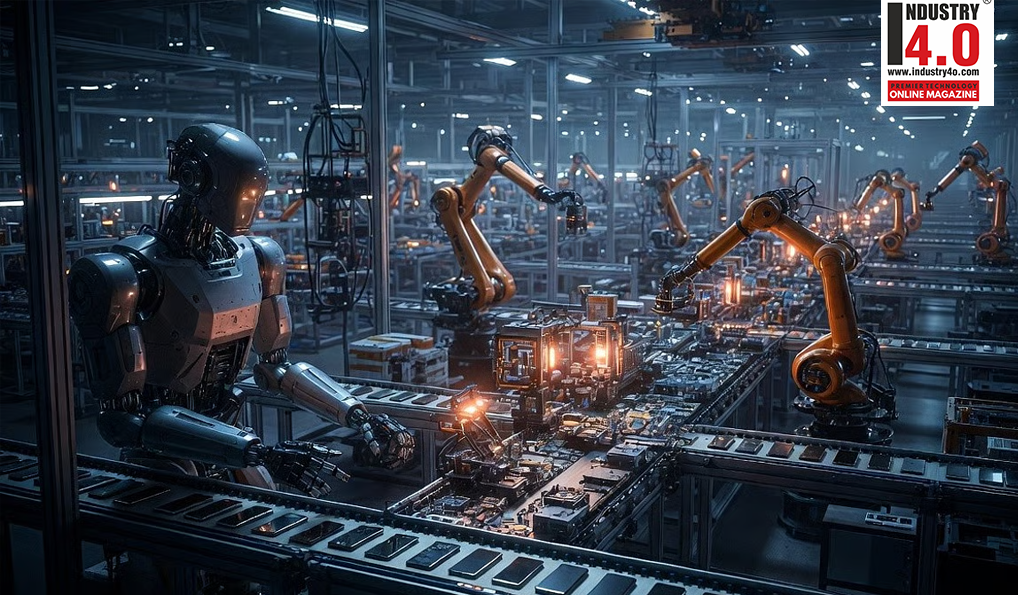
Since the industrial revolution, manufacturers have aimed to automate shop-floor operations and put intelligence directly where work happens. Physical AI is bringing that goal within reach by orchestrating robots, machinery, and physical workflows in real time.
This is the vision behind the “dark factory” or “lights-out factory”- a facility where intelligent systems monitor operations, make decisions, and control equipment with minimal human intervention. Full autonomy remains the ultimate destination, but getting there requires stepping through clear operational maturity levels.

The Road to the ‘Dark Factory’
We see this shift as a steady progression. First, plants capture telemetry from equipment and production processes. Second, analytics convert that raw data into operational insights. Third, plants act on those insights. Finally, systems continuously learn from outcomes to optimize ongoing operations.
 Moving through these stages depends as much on operational context as on raw technology. Reliability, regulatory compliance, cybersecurity, and safety dictate what works on the floor. While non-deterministic behavior is manageable in a conversational chatbot, it cannot be tolerated when AI directly controls heavy machinery.
Human in the Loop
Over the next few years, manufacturers will rely heavily on human-in-the-loop systems rather than fully autonomous physical AI. AI will deliver real-time recommendations to operators, leaving key operational decisions with human experts.
For plant personnel, AI lightens cognitive strain. In-context guidance surfaces exact procedural steps when needed, avoiding reliance on memory or manual lookup. Continuous system monitoring alerts workers only when an anomaly requires human intervention.
The immediate focus is empowering frontline workers, letting software handle routine monitoring while people focus on complex troubleshooting and judgment calls.
The Energy Challenge
Power consumption is a major constraint for industrial autonomy. Deploying more AI, robotics, and edge compute increases power demands. AI workloads run either at the edge (orchestrating sensors and machinery on-site, raising plant power requirements) or in data centers (requiring substantial power, cooling, and network bandwidth).

According to PwC data reported by Manufacturing Dive, 46% of energy and industrial leaders are evaluating renewable generation and storage options. Research from HFS Research highlights primary obstacles to integrating clean energy: high capital expenditures (54%), limited renewable access (48%), and difficulty measuring sustainability ROI (40%).
To manage these loads, manufacturers are turning to local power solutions and microgrids. For example, Hitachi and X LABS are developing gigawatt-scale energy parks for AI data centers under an Energy-as-a-Service model, combining on-site power generation, storage, and management. This demonstrates how AI expansion impacts infrastructure, even as AI algorithms optimize power consumption, spot equipment inefficiencies, and project demand.
Cybersecurity
Connecting IT, OT, and physical AI systems expands the cyber threat landscape across operational networks, IIoT devices, and autonomous systems. In industrial settings, security breaches carry kinetic risks that directly threaten personnel safety, physical machinery, and production continuity. Defense-in-depth strategies aligned with standards like ISA/IEC 62443 and ISA-95—combining zero-trust containment, hardware-level security, unified IT/OT telemetry, and human-in-the-loop governance—are necessary to protect modern plant operations.

Final Thoughts
The transition to autonomous manufacturing will be steady and incremental. In the near term, AI serves as an operational copilot—providing insights, reducing repetitive tasks, and aiding decision-making—while plants build toward greater autonomy as technology and energy infrastructure mature.
The factory of the future depends on how well manufacturers align intelligent systems, human expertise, and sustainable energy infrastructure. Success belongs not to the plants with the most automation, but to those that scale intelligence alongside workforce safety and resource efficiency.
About the Author :
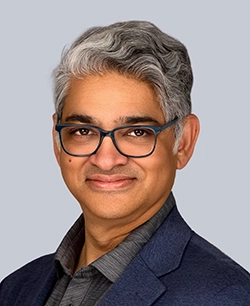 Mr. Kunaal Mahanti
SVP & Chief Technology Officer – Physical AI, Industrial and Mobility Business – Global Logic, a Hitachi Group Company

Mr. Kunaal Mahanti is a seasoned product engineering leader with 25 years of expertise spanning operating systems, embedded systems, system architecture, Industry 4.0, artificial intelligence (AI), Physical AI, consulting, and business strategy.
Mr. Kunaal Mahanti currently serves as Senior Vice President and Chief Technology Officer for the Mobility and Industrial Business Unit at GlobalLogic, a Hitachi Group Company and global leader in digital engineering, where he continues to drive the technology strategy and innovation agenda for these businesses on a worldwide scale. In this role, he is also accelerating GlobalLogic’s Physical AI initiatives across its global operations.
Prior to his current role, Mr. Kunaal held the position of Senior Vice President and Partner at Ness Digital Engineering, where he oversaw Engineering Research & Development, Technology & Independent Software Vendors, and Private Equity. Earlier in his career, as GM & CEO for ITI, he defined and led its post-acquisition integration with Wipro Engineering. As an architect and later as a practice, pre-sales, and sales leader at Wipro, he led some of the company’s largest global engineering pursuits, securing approximately $750M in large deals. Throughout his career, he has established offshore centers, transitioned engineering operations internationally, led IP development, and incubated new technology practices.
A self-taught programmer since the age of 11, Mr. Kunaal remains deeply passionate about technology, Linux, open source, devices, and gadgets — a passion that continues to inform his approach to engineering leadership at GlobalLogic’s global scale.
Mr. Kunaal Mahanti is Bestowed with the following Licenses & Certifications :
https://www.linkedin.com/in/ku
Mr. Kunaal Mahanti can be contacted at: