
India’s AI Moment: Why the Future Belongs to Those Who
Connect AI, Cloud, Quantum, Sustainable Energy, and Human Intelligence
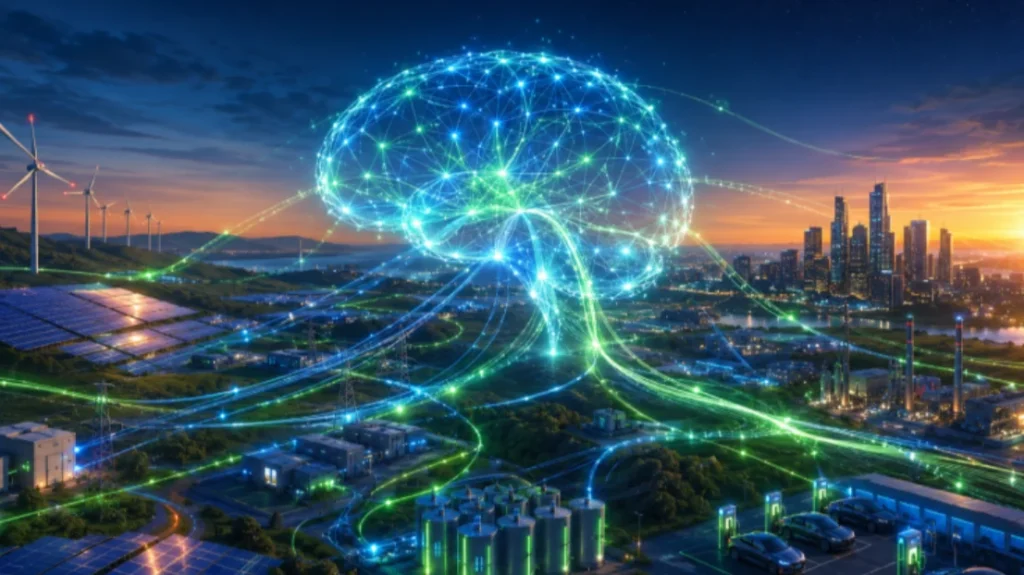
Over the last few months, I have been closely observing the evolution of Artificial Intelligence, Robotics, Cloud Computing, Quantum Computing, and Sustainable Energy. While many people view these as separate industries, I believe they are becoming one interconnected technology ecosystem that will define the next several decades of economic growth.
At the same time, a second reality is emerging.
The AI conversation is shifting away from blind excitement and toward practical business value. We are moving from experimentation to execution, from hype to measurable outcomes, and from isolated innovation to integrated transformation.

The organizations that understand this shift early will become the leaders of the next industrial revolution.
The AI Industry Is Growing Up
For the last few years, AI discussions were dominated by possibilities:
- AI replacing jobs
- Autonomous agents running businesses
- Fully automated enterprises
- Artificial General Intelligence (AGI)
Today, the market is becoming more realistic.
Business leaders are asking new questions:
- What is the ROI?
- How much infrastructure is required?
- Can AI scale economically?
- Is the technology reliable in mission-critical environments?
- How do we integrate AI into existing business workflows?
These questions are healthy because true technological transformation is never about hype. It is about sustainable value creation.
The companies winning today are not necessarily deploying the most advanced AI models. They are deploying AI where it delivers measurable business outcomes.
The Two Realities of AI: Bottlenecks and Breakthroughs
We are witnessing two parallel realities.
 🚧 Reality 1: The Bottlenecks
Cost Pressures
Organizations are discovering that running advanced AI models at scale is expensive.
Many enterprises are now evaluating whether they should rely on external AI providers or build optimized models internally.
The industry is rapidly moving toward:
- Cost-efficient AI
- Smaller specialized models
- Hybrid deployment approaches
- Industry-specific AI systems
The question is no longer “Can AI do this?”
The question is:
“Can AI do this profitably?”
Agentic AI Is Progressing More Slowly Than Expected
Fully autonomous agents remain a huge opportunity, yet real-world deployment continues to face challenges:
- Reliability
- Reasoning consistency
- Error management
- Complex decision-making
Businesses operating in healthcare, financial services, manufacturing, and logistics cannot afford costly mistakes.
As a result, many organizations are adopting a Human + AI model rather than complete automation.
Enterprise Caution
Large companies are becoming more selective about where AI can be trusted.
Critical functions still require:
- Human oversight
- Governance frameworks
- Validation mechanisms
- Risk controls
This does not mean AI is failing.
It means AI is maturing.
⚡ Reality 2: The Breakthroughs
While challenges exist, innovation continues at unprecedented speed.
Scientific Discovery
AI is increasingly accelerating scientific research.
Material discovery, drug development, climate modeling, and advanced simulations are now benefiting from AI-powered analysis that can reduce years of research into significantly shorter cycles.
Mass Adoption
For the first time in history, AI capabilities are reaching billions of users through platforms they already use daily.
This creates a powerful feedback loop:
- More users
- More data
- Better models
- Faster innovation
 Next-Generation Models
AI models continue to improve in:
- Reasoning
- Multimodal understanding
- Real-time interaction
- Agentic workflows
- Decision support
The future is not about one giant model.
The future is about ecosystems of specialized intelligence working together.
The Ultimate Technology Value Chain
Many investors and business leaders examine AI, Cloud, Quantum Computing, and Sustainable Energy independently.
I believe this is a mistake.
These technologies form a single value chain.
🤖 AI & Robotics: The Brain and Hands
AI provides intelligence.
Robotics provides execution.
Together they create physical automation capable of working in factories, warehouses, hospitals, farms, and homes.
Future robots will not simply follow programmed instructions.
They will:
- Learn
- Adapt
- Observe
- Improve
Just like human workers.
☁️ Cloud Computing: The Nervous System
Advanced AI requires massive computational resources.
Most enterprises cannot host these capabilities locally.
Cloud infrastructure provides:
- Scalability
- Data storage
- Model deployment
- Global accessibility
Without the cloud, modern AI cannot operate at enterprise scale.
Cloud is the digital nervous system connecting everything.
🌀 Quantum Computing: The Accelerator
As AI models become larger and more sophisticated, classical computing eventually faces limitations.
Quantum computing represents the next major leap in processing capability.
Potential applications include:
- Drug discovery
- Financial modeling
- Logistics optimization
- Material science
- Advanced AI training
Quantum computing may not replace classical computing soon, but it will significantly accelerate solving the world’s most complex problems.
⚡ Sustainable Energy: The Foundation
This is perhaps the most overlooked part of the technology revolution.
Every AI model, cloud data center, and future quantum computer consumes enormous amounts of energy.
Without sustainable energy, technological growth becomes unsustainable.
That is why global technology companies are investing heavily in:
- Solar Energy
- Wind Energy
- Nuclear Energy
- Grid Modernization
- Future Fusion Technologies
Sustainable Energy is not a separate industry anymore.
It is becoming the foundation of the digital economy.
The Missing Piece: Cultural Intelligence
One area that receives far less attention is cultural adaptation.
Technology often assumes a standardized global user.
Human behavior does not work that way.
Consider something as simple as eating a meal.
Different regions use:
- Chopsticks
- Forks and knives
- Hands
- Regional serving customs
- Cultural dining rituals
A robot trained on generic global data may perform impressively in a laboratory but fail immediately in a local household environment.
The future of AI will not belong only to the companies with the most data.
It will belong to the companies with the most relevant data.
Why Local Intelligence Matters
For AI and robotics to truly become universal, three major developments are required:

1️⃣ Integrated AI Ecosystems
Today’s technology landscape is fragmented.
Imagine combining:
- Best-in-class reasoning models
- Best-in-class vision models
- Best-in-class robotics systems
- Best-in-class industry expertise
The productivity gains could be extraordinary.
2️⃣ Real-Time Validation Systems
Future AI systems must continuously evaluate their own decisions.
This means:
- Self-checking mechanisms
- Error correction loops
- Statistical confidence measurement
- Human escalation pathways
Trustworthy AI will outperform merely powerful AI.
3️⃣ Hyperlocal Data Infrastructure
The world needs more:
- Regional datasets
- Language-specific datasets
- Industry-specific datasets
- Cultural behavior datasets
True intelligence is contextual.
Global intelligence without local understanding remains incomplete.
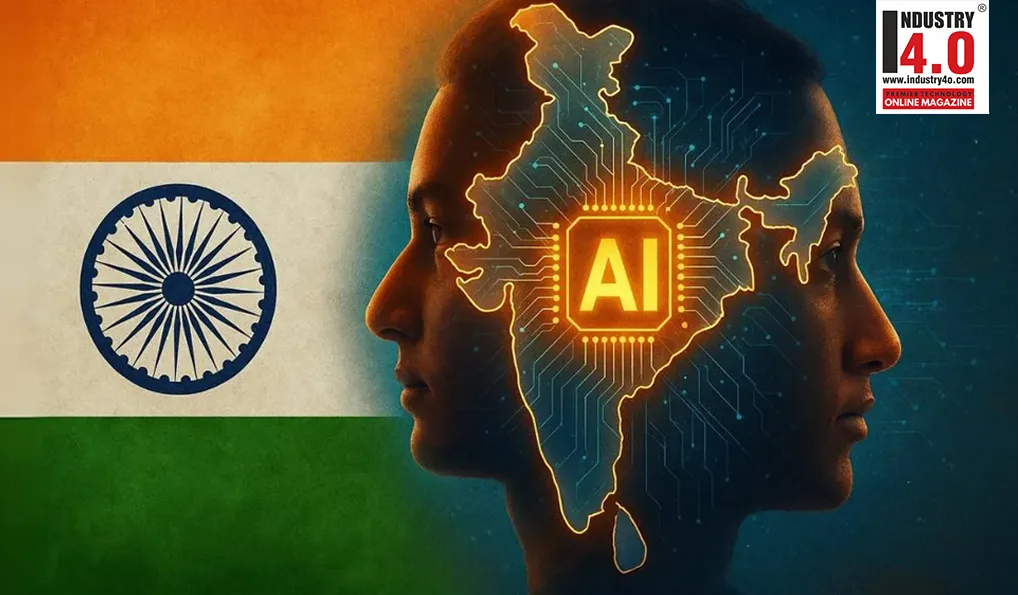
India’s AI Opportunity
India stands at a remarkable crossroads.
With over 1.4 billion people, millions of businesses, and one of the world’s most vibrant digital ecosystems, the opportunity is enormous.
Yet AI adoption remains relatively early compared to its full potential.
Many organizations are still limiting AI usage to:
- Customer service
- Reporting
- Basic analytics
The next stage will be enterprise-wide transformation.
Where India Can Leapfrog
🏭 Manufacturing
- Predictive maintenance
- Quality optimization
- Supplier intelligence
- Production planning
- Inventory forecasting
🏥 Healthcare
- Rural diagnostics
- Disease prediction
- Patient management
- Personalized treatment insights
🛒 Retail
- Demand forecasting
- Dynamic pricing
- Customer engagement
- Inventory optimization
📦 Logistics
- Route optimization
- Fleet management
- Warehouse automation
- Last-mile efficiency
💼 Enterprise Functions
- Finance
- HR
- Procurement
- Compliance
- Customer success
The opportunity is not simply AI adoption.
It is AI-driven business transformation.
The Leadership Challenge
The future does not belong solely to data scientists.
It belongs to leaders who can connect:
- Business Strategy
- AI
- ERP
- SaaS
- Cloud
- Automation
- Industry Expertise
Technology alone does not create value.
Business outcomes create value.
The leaders who understand both technology and business transformation will become the architects of the next growth cycle.
Final Thoughts
We are entering a new era where AI, Robotics, Cloud Computing, Quantum Computing, and Sustainable Energy are converging into one interconnected ecosystem.
At the same time, success will require more than technology.
It will require:
✅ Cost efficiency
✅ Cultural adaptability
✅ Trustworthy AI
✅ Sustainable infrastructure
✅ Business-focused leadership
The biggest winners of the next decade will not be those chasing every new technology trend.
They will be those who understand how all these technologies work together to solve real-world problems at scale.
The future is not AI alone.
The future is the intelligent integration of technology, energy, infrastructure, and human understanding.