

How Artificial Intelligence is Improving Product Time to Market ?
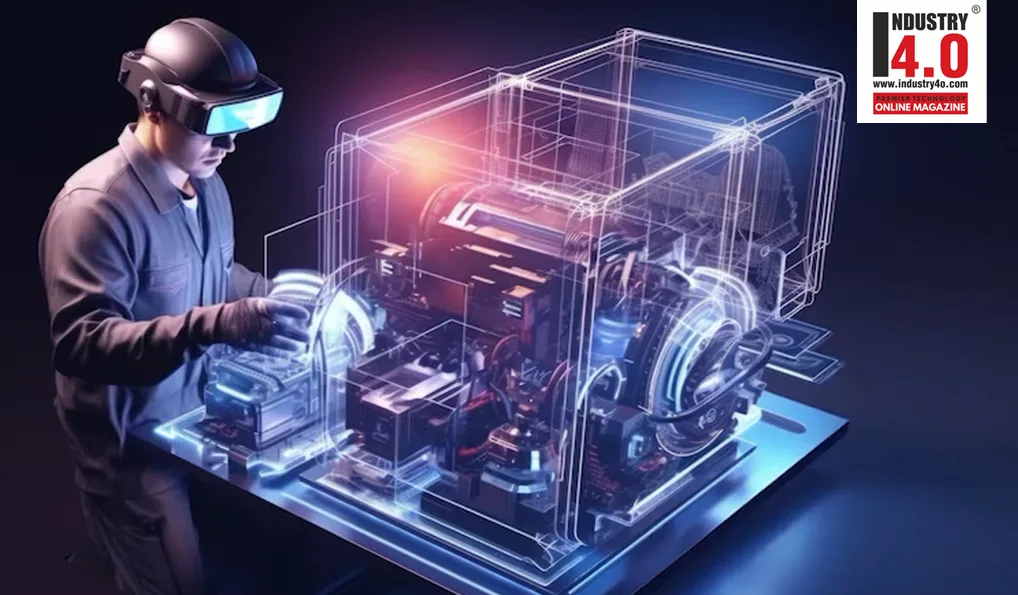
In today’s hyper-competitive global marketplace, the speed at which organizations can move a product from concept to customer often determines their ability to lead, survive, or fade away. Traditionally, product development lifecycles were measured in quarters or even years, with countless manual processes, capacity bottlenecks, and unforeseen delays. Now, Artificial Intelligence (AI) is unleashing a new era-where accelerated, data-driven development translates into shorter time to market, greater innovation, and a decisive competitive advantage.
But how exactly is AI achieving these outcomes, and what should companies focus on to leverage this transformation? Let’s dig deeper.

The Challenge: Speed vs. Complexity
Before exploring AI’s impact, it’s important to recognize the forces at play in modern product development:
• Increasingly complex products: Whether it’s a new smartphone, advanced medical device, or a digital service, products now blend software, hardware, and cloud-based services.
• Rising customer expectations: Consumers and businesses alike demand rapid innovation and immediate delivery of the latest features.
• Globalized supply chains: Sourcing components and collaborating across continents increases risk and unpredictability.
Within this context, accelerating time to market isn’t just about working harder or hiring more people. It’s about working smarter-streamlining decision making, eliminating friction, and uncovering opportunities that humans alone might miss.
Where AI Drives Acceleration
1. Ideation and Market Sensing
The earliest phase – identifying promising ideas and market needshas been famously uncertain. AI is shifting this through:
• Automated Trend Analysis: Natural language processing (NLP) models analyze millions of online conversations, patent filings, and research papers to detect emerging market trends and consumer preferences far earlier than manual research allows.
• Sentiment Analysis: Fast assessment of customer sentiment on social media or review platforms helps companies iterate on concepts that will truly resonate.
Example: Consumer electronics firms now use AI to predict product features likely to drive adoption by processing social data and e-commerce feedback in real time.
2. Design and Prototyping
Designing products is inherently creative-but AI is making it faster and smarter:
• Generative Design: AI-powered tools can produce and evaluate thousands of design alternatives, factoring in functional, structural, and cost constraints, then suggest the most efficient options.
• Rapid Simulation: Machine learning models mimic physical testing, providing virtual feedback on design performance in seconds instead of weeks.
• AI-Enhanced CAD: AI integrates directly into computer-aided design platforms, auto-correcting errors, optimizing part layouts, and suggesting manufacturable designs.
Example: In automotive, generative design led to new lightweight parts, engineered by AI, reducing prototyping cycles from months to days.
 3. Streamlined Project Management
Staying on schedule requires real-time awareness and decision making. AI-driven platforms now:
• Predict Delays: By analyzing historical project data, task status, resource allocation, and even team sentiment, AI predicts where delays are likely to occur-before they happen.
• Dynamic Planning: AI recalibrates project timelines and dependencies automatically as priorities shift or blockers appear, helping teams stay agile.
• Resource Optimization: Algorithms allocate human and material resources most efficiently, ensuring bottlenecks are addressed proactively.
Example: In pharmaceutical development, AI helped identify clinical trial sites with the highest odds of on-time recruitment, compressing overall timelines by months.
4. Supply Chain and Manufacturing
Manufacturing schedules and component delivery were historically the biggest cause of launch delays. Here, AI excels at:
• Demand Forecasting: ML models predict product demand with much greater accuracy, reducing costly overstock or delays due to shortages.
• Supplier Risk Detection: By monitoring news, logistics events, and financial data, AI raises red flags for potential supply interruptions.
• Predictive Maintenance: Sensors and AI detect when manufacturing equipment needs attention, slashing downtime.
Example: Companies like Siemens use AI-based digital twins of factories to simulate production runs and identify process optimizations before going live.
5. Quality Assurance
Manual quality assurance is slow and error prone. AI improves this through:
• Automated Defect Detection: Computer vision systems catch minute defects or inconsistencies that human eyes might miss-at production speed.
• Self-Learning Inspection Models: AI systems improve with every batch, learning new defect types without extensive retraining.
Example: In electronics, AI-based visual inspectors reduced defect rates by over 50%, enabling safe acceleration of assembly lines.
6. Continuous Feedback and Improvement
Post-launch, AI keeps products competitive:
• Real-Time Usage Data Analysis: Embedded AI monitors field usage, performance, and failure data, guiding the next set of enhancements.
• A/B Testing Automation: For digital products, AI automates and learns from multivariate tests, enabling instant improvements with statistically valid results.
Key Success Factors for AI-Driven Time to Market
a) Data Quality and Integration
AI’s effectiveness depends on access to clean, relevant data-across engineering, supply chain, customer service, and more. Integrating siloed systems is foundational.
b) Talent and Human-AI Collaboration
AI accelerates, but humans remain essential for strategy, creativity, and ethical oversight. The most effective companies pair “citizen data scientists” and AI specialists with product managers and engineers.
c) Continuous Process Optimization
Organizations that systematically embed AI into their PLM (Product Lifecycle Management), ERP (Enterprise Resource Planning), and SCM (Supply Chain Management) platforms gain compounding benefits over time.

Risks and Considerations
While the upside of AI in reducing time to market is massive, organizations must manage:
• Data Security: Sensitive product and customer information must be protected at every AI touchpoint.
• Change Management: Teams need clear communication and upskilling to embrace new AI-driven workflows.
• Bias and Transparency: AI models must be monitored for unintended bias, especially where market or design decisions are concerned.
Looking Forward
The pace of innovation will only accelerate, with AI at its core. Soon, entirely digital product twins-learning and optimizing themselves-will make it possible to conceptualize, design, test, and manufacture new products in a continuous, AI-powered loop.
Leaders who invest now in AI, data integration, and team capabilities will not only improve time to market-they’ll redefine what’s possible and lead their industries into the future.
Conclusion:
Artificial Intelligence is revolutionizing every stage of the product development journey. From ideation to design, project management, supply chain, and quality assurance, AI is the accelerator pedal companies need to stay ahead in a fast-moving world. By embracing AI not just as a tool, but as a core capability, businesses can achieve breakthrough speed, higher quality, and lasting competitive advantage.
About the Author:

Mr. Vivek Agarwal brings more than 15 years of consulting experience spanning product lifecycle management (PLM), digital transformation, and data-led operations.
Mr. Vivek Agarwal’s career includes leadership and consulting roles with Deloitte, Capgemini, Accenture, Tata Consultancy Services, and Saiana Technologies, supporting complex engineering and R&D transformations across automotive, aerospace, high tech, and medical devices. He is recognized for guiding organizations through capability maturation, value mapping, and end‑to‑end process redesign across PLM platforms such as SAP PLM, 3DEXPERIENCE, Teamcenter, and Oracle Agile.
Mr. Vivek Agarwal skills portfolio spans cybersecurity and cryptography for engineering data, secure data exchange (CAD, BOMs, digital twins), data privacy and governance, and regulatory frameworks (GDPR, NIST, ISO 27001)—all anchored in collaborative delivery with product engineering, IT security, and product management teams.
Beyond client work, Mr. Vivek Agarwal thought leadership has been cited in academic literature on supply chain dynamics for 3‑D printed products, underscoring a blend of practical impact and research‑aware perspective.
Mr. Vivek Agarwal can be contacted at:
Mr. Vivek Agarwal is Bestowed with the following Licenses & Certifications :
https://www.linkedin.com/in/agrawalvivek/details/certifications/






 is unleashing a new era-where accelerated, data-driven development translates into shorter time to)