

The Silent Snake Strategy
Recently, I stumbled across a fascinating fact about rattlesnakes. Like many people, I had always assumed the famous rattle on the end of a rattlesnake’s tail worked like a baby’s rattle or a maraca. Put something inside a hollow object, shake it, and noise comes out. Simple.
Except that’s not how it works at all. The rattlesnake’s rattle contains nothing; no pebbles, no seeds, no tiny biological percussion instruments, or anything else like that. The sound comes from a series of hollow keratin segments striking against one another as the snake rapidly vibrates its tail.
 When I learned that, I paused for a moment. Not because of the biology, but because of the business lesson.
Most of us expect noise to indicate substance. We hear a loud sound and assume something substantial must be creating it. Yet the rattlesnake accomplishes something remarkable. It produces an unmistakable signal from a structure that is essentially empty inside.
That observation led me to think about something I have seen repeatedly throughout my career in data analytics and business intelligence. Organizations often develop what appears to be a sophisticated analytics strategy. They create presentations. They form committees. They introduce impressive terminology. They purchase technology. They hold planning sessions. They announce initiatives.
 All of this shows that there’s certainly plenty of noise. But when you look inside, sometimes there is surprisingly little substance. The dashboards sparkle. The strategy documents are beautifully formatted. The mission statements sound impressive. The meetings are well attended. Yet people throughout the organization quietly wonder the same thing: “What exactly are we accomplishing with all of this?”
Unlike a rattlesnake, however, a business intelligence strategy cannot afford to be empty.
The snake’s rattle is merely a warning signal. Your analytics program is supposed to help people make better decisions. That requires substance.
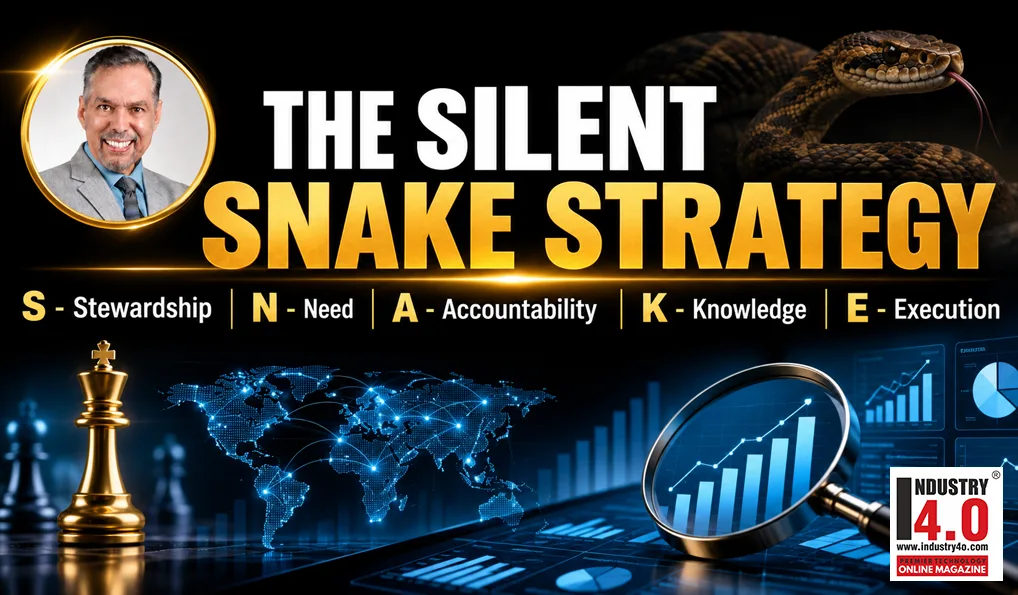
Over the years, I have come to believe that effective analytics strategies possess five characteristics. As I reflected on the rattlesnake story, it occurred to me that those characteristics could be captured by a fitting acronym: S.N.A.K.E.
And unlike the rattlesnake’s famous tail, every letter must contain something meaningful.
S Is for Stewardship
The first responsibility of a data and analytics strategy is stewardship. That word may sound old-fashioned, but I think we need more old-fashioned words these days. Stewardship means recognizing that data is not merely an asset. It is a responsibility.
Every report, dashboard, scorecard, model, and metric ultimately influences human decisions. Those decisions affect customers, patients, citizens, employees, students, families, and communities. Whenever I encounter an organization focused exclusively on technology, I become concerned.
Technology matters. Data architecture matters. Platforms matter. But stewardship asks a more important question: “Are we managing information in a way that deserves people’s trust?”
Trust is difficult to earn and remarkably easy to lose. Once confidence in the data disappears, sophisticated analytics tools become little more than expensive decorations. That being said, stewardship keeps the focus where it belongs: on responsible management of information that people depend upon.
 N Is for Need
One of the most common mistakes in analytics is beginning with solutions instead of needs. I have witnessed organizations spend months designing reports nobody requested and years maintaining dashboards that few people ever use. This usually happens because teams become fascinated by what technology can do rather than what people actually need.
Over the years, I have noticed that one question can quickly reveal whether an analytics initiative is grounded in reality or drifting toward activity for activity’s sake: “What decision will this help someone make?” That’s a simple question, yet remarkably powerful. If the answer is vague, uncertain, or buried beneath layers of technical terminology, the initiative may already be heading in the wrong direction.
Every successful analytics initiative begins with understanding a genuine business need. Not a theoretical need, not a fashionable need, not a vendor-created need, but a real need. Someone is trying to solve a problem, allocate resources, improve outcomes, reduce risk, understand performance, or identify opportunities. When analytics addresses authentic needs, people embrace it. But when it doesn’t, reports become digital wallpaper.
A Is for Accountability
Data without accountability can become surprisingly dangerous. A dashboard may reveal declining performance. A report may identify emerging risks. A predictive model may forecast future problems. Then what?
I have seen organizations invest enormous effort collecting information only to discover that nobody owns the outcomes. The reports keep coming, the metrics keep updating, the meetings keep occurring, but the problems remain. Information alone rarely changes behavior; people do.
Accountability creates the crucial connection between insight and action. When a metric matters, someone should understand it. Someone should monitor it. Someone should respond when it changes. Someone should be empowered to improve it. Otherwise, the organization generates knowledge without producing results. And knowledge that never influences action eventually becomes noise.
 K Is for Knowledge
A surprising amount of business intelligence produces information without creating knowledge. The distinction matters because information tells us what happened, whereas knowledge helps us understand why it happened and what we should do next.
To that point, consider the difference between these two statements:
- “Customer satisfaction dropped 6%.”
- “Customer satisfaction dropped 6% because response times increased after staffing reductions in three regional centers.”
That is knowledge. One number generates curiosity, whereas the other supports decisions. Effective analytics strategies pursue understanding, not merely reporting. That means asking questions, investigating relationships, exploring context, seeking explanations, and looking beyond the colorful charts that often dominate executive presentations.
I enjoy dashboards just as much as anyone in our profession, but no executive has ever improved organizational performance merely by gazing thoughtfully at a pie chart. Sooner or later, knowledge must emerge. And that knowledge becomes wisdom when applied consistently over time.
E Is for Execution
Execution is where analytics earns its paycheck. Organizations rarely suffer from a shortage of ideas; but rather, they suffer from a shortage of implementation. Some of the most impressive strategic plans I have ever seen now sit forgotten in shared drives, archived servers, and neglected folders. They were not bad plans. Many were excellent plans; they simply never became reality.
An effective analytics strategy should influence everyday behavior. Frontline employees should feel its impact. Managers should rely upon it. Leaders should reference it when making decisions. Resources should be allocated differently because of it. Processes should improve because of it. Outcomes should become measurably better because of it.
The ultimate purpose of analytics is improvement; not analysis. Execution transforms insight from an intellectual exercise into organizational progress. That is where value appears. Every time.
The Difference Between Noise and Meaning
When I think back to that rattlesnake, I cannot help smiling. Nature has a wonderful sense of irony. For most of my life, I assumed the rattle contained something that produced the sound. Instead, the sound comes from the structure itself. Hollow segments moving rapidly against one another create the warning. Certainly, an effective design for a rattlesnake, but it would be a terrible design for an analytics strategy.
Organizations can create plenty of motion. They can generate reports, metrics, presentations, steering committees, frameworks, roadmaps, and endless discussions about data maturity. The activity may sound impressive from a distance. The danger appears when stakeholders finally take a closer look.
If they discover there is no stewardship, no clear business need, no accountability, no meaningful knowledge, and no execution, the entire effort begins to resemble that snake’s famous tail. That is, lots of rattling, but very little substance.
The organizations that truly succeed with analytics understand something important. People are not looking for more dashboards; they are looking for confidence. They want trusted information that helps them make better decisions, solve real problems, and serve others more effectively. In fact, rather than simply making noise, the best data strategies make a difference.
So, the next time you hear a rattlesnake’s warning buzz, remember the surprising lesson hidden inside that peculiar biological design. The rattle works precisely because nature only needed a signal.
Business intelligence has a higher calling. Your analytics strategy cannot simply sound important; it must contain something worth hearing. And when Stewardship, Need, Accountability, Knowledge, and Execution come together, the result is not a hollow rattle echoing across the landscape. It is a clear voice guiding better decisions, building trust, and creating measurable value for the people who depend upon it.
Now THAT is the kind of SNAKE every organization should want.
Bringing Data to Life and Life to Data”
 About the Author:

Dr. Joe Perez,
Team Lead / Senior Systems Specialist,
NC Department of Health and Human Services

Dr. Joe Perez ( Dr.Joe ) is also the Chief Technology Officer – CogniMind
To book Dr. Joe Perez for your speaking engagement please click here

Dr. Joe Perez was selected as the 2023 Gartner Peer Community Ambassador of the Year.
Dr. Joe Perez is a truly exceptional professional who has left an indelible mark on the IT, health and human services, and higher education sectors. Dr. Joe Perez journey began in the field of education, where he laid the foundation for his career. With advanced degrees in education and a doctorate that included a double minor in computers and theology, Dr. Joe Perez embarked on a path that ultimately led him to the dynamic world of data-driven Information Technology.
In the early 1990s, Dr. Joe Perez transitioned into IT, starting as a Computer Consultant at NC State University. Over the years, Dr. Joe Perez’s dedication and expertise led to a series of well- deserved promotions, culminating in his role as Business Intelligence Specialist that capped his 25 successful years at NC State. Not one to rest on his laurels, Dr. Joe Perez embarked on a new challenge in the fall of 2017, when he was recruited to take on the role of Senior Business Analyst at the NC Department of Health, Human Services (NCDHHS). His impressive journey continued with promotions to Senior Systems Specialist and Team Leader, showcasing his versatility and leadership capabilities.
In addition to his full-time responsibilities at NCDHHS, Dr. Joe Perez assumed the role of
fractional Chief Technology Officer at a North Carolina firm in October 2020. An Amazon best-selling author with over 21,000 followers on LinkedIn and numerous professional certifications, he is a highly sought-after international keynote speaker and recognized expert in data analytics and visualization.
Dr. Joe Perez’s contributions have not gone unnoticed. Dr. Joe Perez is a recipient of the IOT Industry Insights 2021 Thought Leader of the Year award, the 2023 Gartner Peer Community Ambassador of the Year award, and Top Ten Global Thought Leader for several categories at Thinkers360 in four consecutive years (2023-2026). Dr. Joe Perez holds memberships in several prestigious Thought Leader communities, and was recently inducted into the United Nations Global Network of Data Officers and Statisticians. Dr. Joe Perez’s reach extends to more than twenty countries worldwide, where he impacts thousands through his speaking engagements, articles, and status as a Distinguished Fellow in the Public Sector Network’s Future Government Institute.
 Beyond his professional achievements, Dr. Joe Perez’s passion for teaching remains
undiminished. Whether as a speaker, workshop facilitator, podcast guest, conference emcee, or team leader, he continually inspires individuals to strive for excellence. He treasures his time with his family and is a gifted musician, singer, pianist, and composer. Joe also dedicates his skills through involvement in his church’s Hispanic ministry. Dr. Joe Perez manages the publication of a widely recognized monthly military newsletter, The Patriot News, and is deeply committed to his community.
To maintain a balanced life, Dr. Joe Perez is a regular at the gym, and he finds relaxation in watching Star Trek reruns. He lives by the philosophy that innovation is the key to progress, and he approaches each day with boundless energy and an unwavering commitment to excellence. Dr. Joe Perez’s journey is a testament to the remarkable achievements of a truly exceptional individual, and more importantly, to the amazing grace of God.
Dr. Joe Perez is Accorded with the following Honors & Awards :
https://www.linkedin.com/in/jw
Dr. Joe Perez is Bestowed with the following Licences, Certifications & Badge:
https://www.linkedin.com/in/jw
https://www.thinkers360.com/tl
Dr.Joe Perez is Voluentering in the following International Industry Associations & Institutions :
https://www.linkedin.com/in/jw
Dr.Joe Perez can be contacted at :
E-mail | LinkedIn | Web | Sessionize | FaceBook | Twitter | YouTube
Explore More Insights by Dr. Joe Perez
 The Silent Snake Strategy
 Secrets Above the Cliff
 DATA Storytelling
 Great BI Strategy
 Data Storytelling: The Tuvalu Lesson
 DATA STORY
 DATA GOVERNANCE
 Igniting the Data Dance – A Synopsis
 Innovation through Data Analytics
 Data Visualization
 Lean Data Governance
 Data Storytelling – Part 2
 Data Storytelling – Part 1
 When a nation deleted a day & taught us about DATA
 Data Governance
 Data Storytelling
 Lessons from the Kestrel for Data Analytics
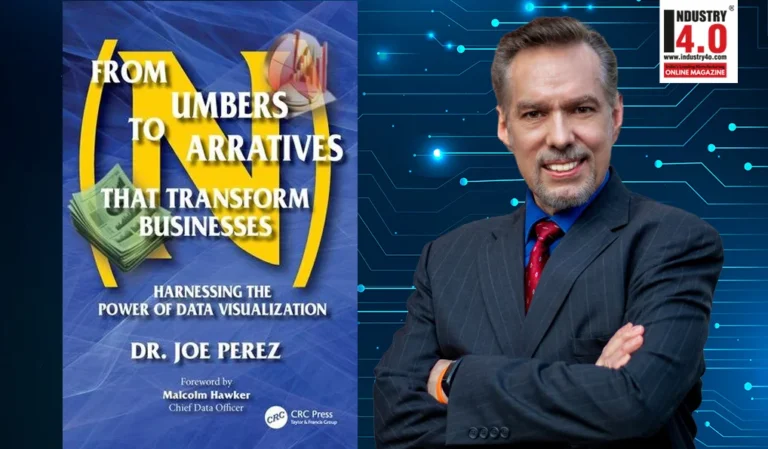 From Numbers to Narratives that Transform Businesses – A Synopsis
 The Dance of DATA : Missteps & Misinterpretations
 Data’s Hidden Canvas
 Data’s Hidden Canvas
 Sumerian Time to Digital Design
 Is Data the New Gold?
 Beyond the Blink: Decoding the Data Deluge
 Beyond the Blink: Decoding the Data Deluge
 Data Governance: Your Digital Lifeline
 Decrypting Trust through Clear Communication
 The Italian Data-Stallion
 From Data Deluge to Predictive Power
 The Madness Behind the Method
 Navigating the Digital Landscape
 Beyond the Data Deluge: Navigating the Tsunami of Transformation
 Data Visualization : Transforming Complexity into Clarity – Part 2
 Data Visualization : Transforming Complexity into Clarity – Part 1
 Balancing Data and Intuition