
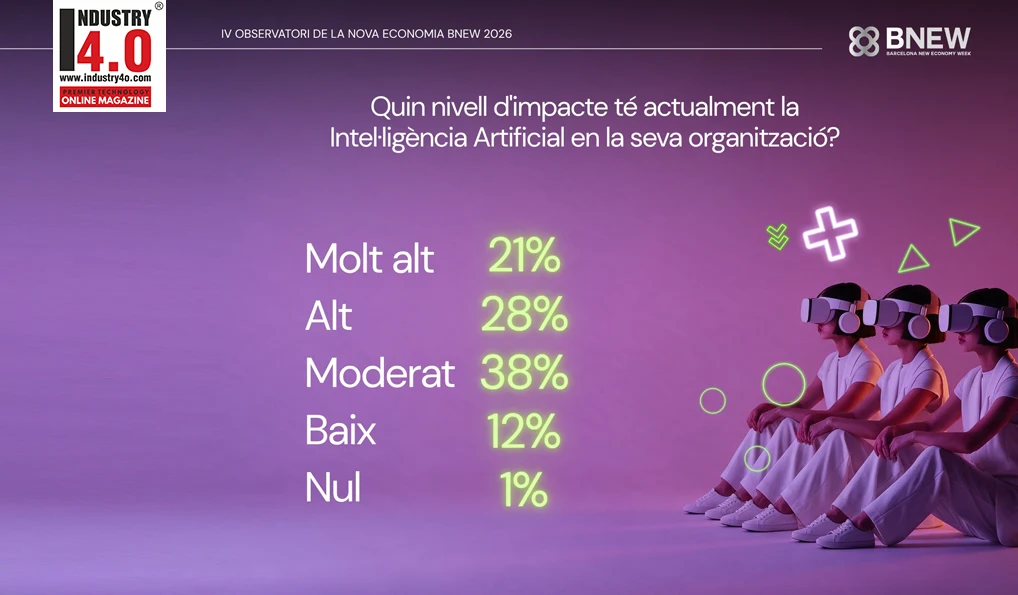
Artificial Intelligence is Directly Impacting 99% of Organizations
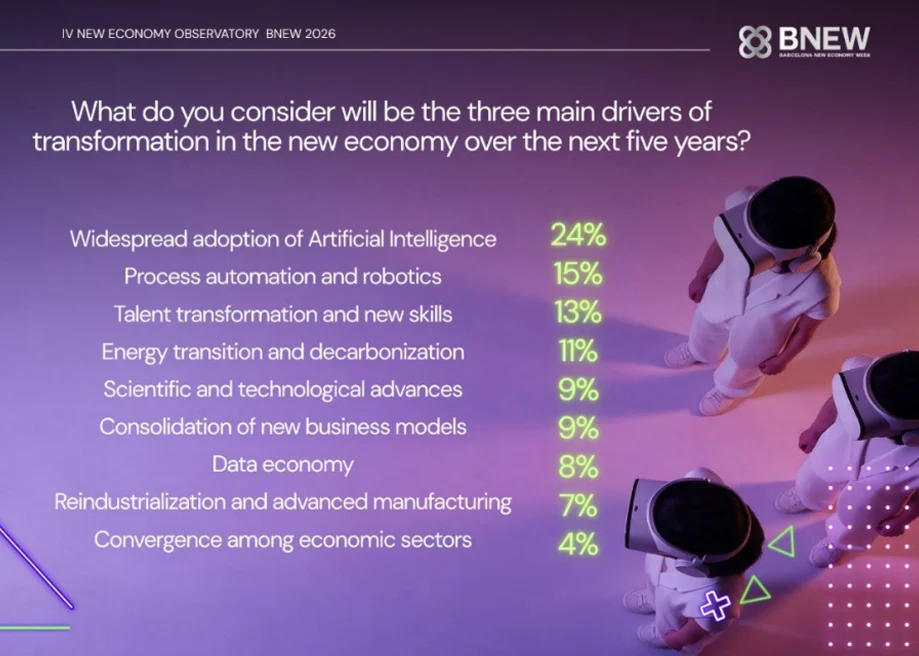
• Mass adoption of AI is positioned as one of the three main drivers that will transform the new economy, alongside automation, robotics, and talent transformation.

• 60% of respondents are optimistic about the opportunities that the new economy will offer in Europe over the next five years, compared to 31% who are indifferent and the remaining 9% who are pessimistic.
• 80% of companies show a clear willingness to continue investing in innovation, while 72% of startups plan to increase their workforce over the next year.
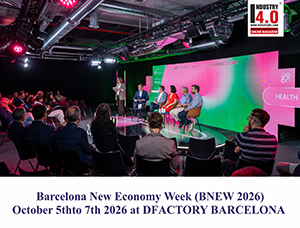
 As part of the seventh edition of Barcelona New Economy Week (BNEW) 2026, taking place from October 5 to 7 at DFactory Barcelona, the Barcelona Free Zone Consortium (CZFB) has published the IV New Economy Observatory, with the participation of 1,792 professionals from the eight sectors represented at the event: Aviation & Space, Agrofood, Gaming, Talent, Science, Health, AI, and Energy. The study’s findings reveal a new economy largely driven by artificial intelligence, featuring positive investment prospects and an optimistic, collaborative outlook for the future.
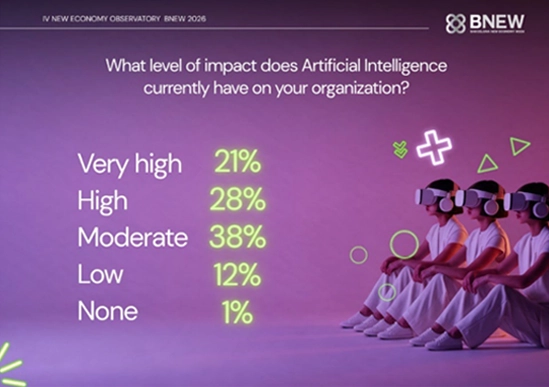
Artificial Intelligence is directly impacting 99% of the organizations participating in the survey. In 49% of cases, the impact is considered highly significant, while 38% report a moderate impact and 12% a low impact.
Along the same lines, the widespread adoption of AI is positioned as one of the three main drivers that will transform the new economy, according to 24% of respondents, alongside automation and robotics (15%) and talent transformation (13%). Other key factors highlighted include the energy transition and decarbonization (11%), scientific and technological advances (9%), and the onsolidation of new business models (9%).
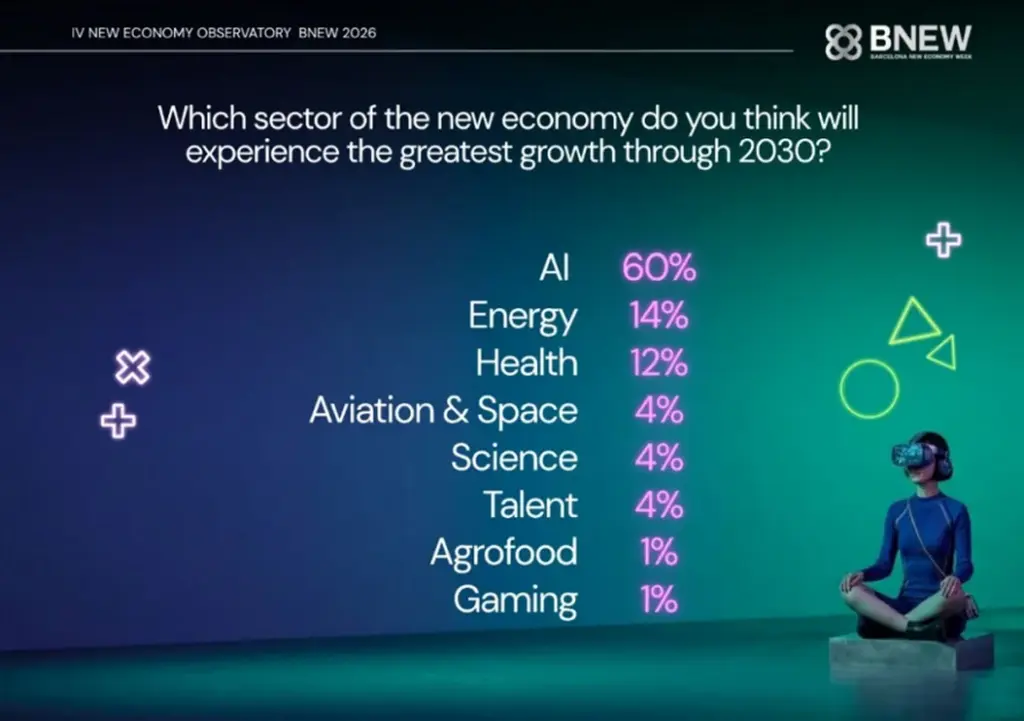
Furthermore, 60% of the professionals surveyed are convinced that AI will be the new economy sector experiencing the greatest growth through 2030, followed by Energy (14%) and Health (12%). Meanwhile, more moderate growth is expected in the Aviation, Science, and Talent sectors, each receiving 4% of responses.
AI and Talent: Going Hand in Hand
Despite its widespread adoption, AI is not perceived as an isolated future trend, but
rather as a capability that is already present in many organizations and is expected to
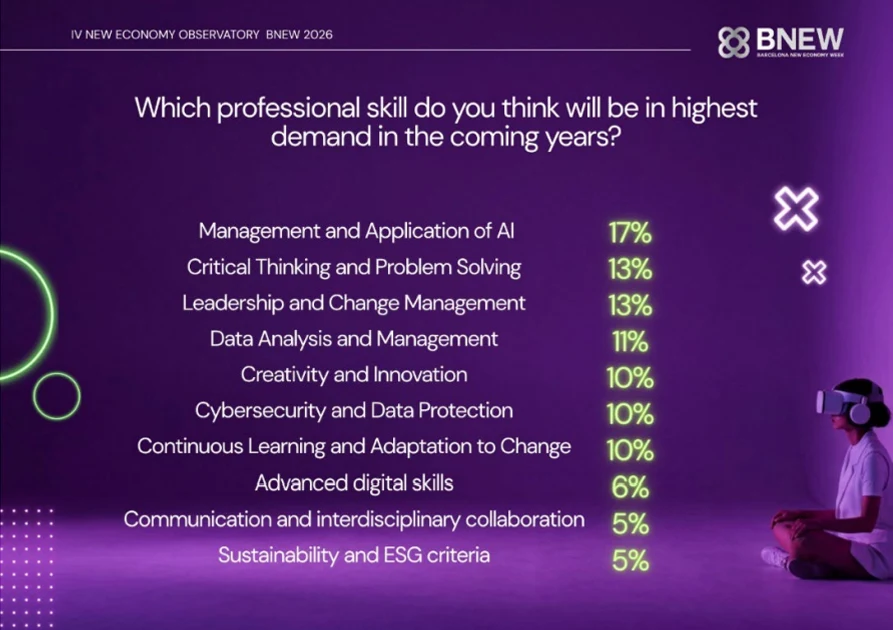
maintain a leading role in the years ahead. In fact, the management and application of Artificial Intelligence will be the most in-demand professional skill in the coming years, according to 17% of the companies participating in the Observatory.

However, demand is not limited to technical profiles. Other skills are also emerging as
essential complements to AI, including critical thinking and problem-solving and
leadership and change management, both identified by 13% of respondents. Data
analysis and management were highlighted by 11%, while creativity and innovation were cited in 10% of cases.
Investment Will Grow, but It Will Need to Deliver Results
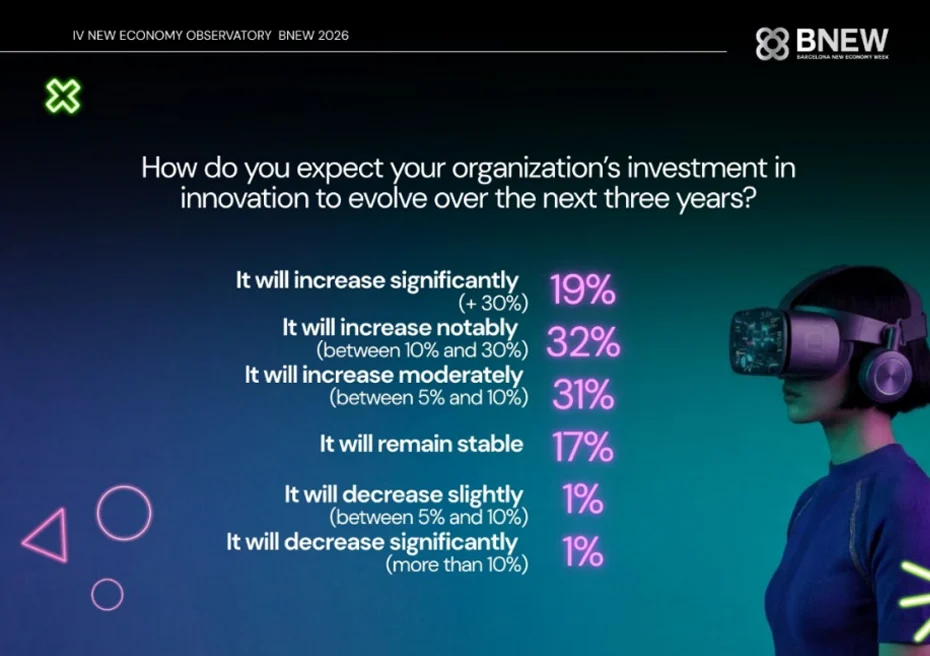
In terms of investment, there is a clear commitment to continuing to invest in innovation, although stronger impact indicators and well-justified business cases will be required. Forecasts indicate an increase in innovation investment in 80% of cases. This increase is expected to be significant for 19% of respondents, substantial for 32%, and moderate for 31%. Meanwhile, 17% of participants in the Observatory expect to maintain their current level of investment in innovation, while only 2% foresee a decrease in innovation investment within their organizations.
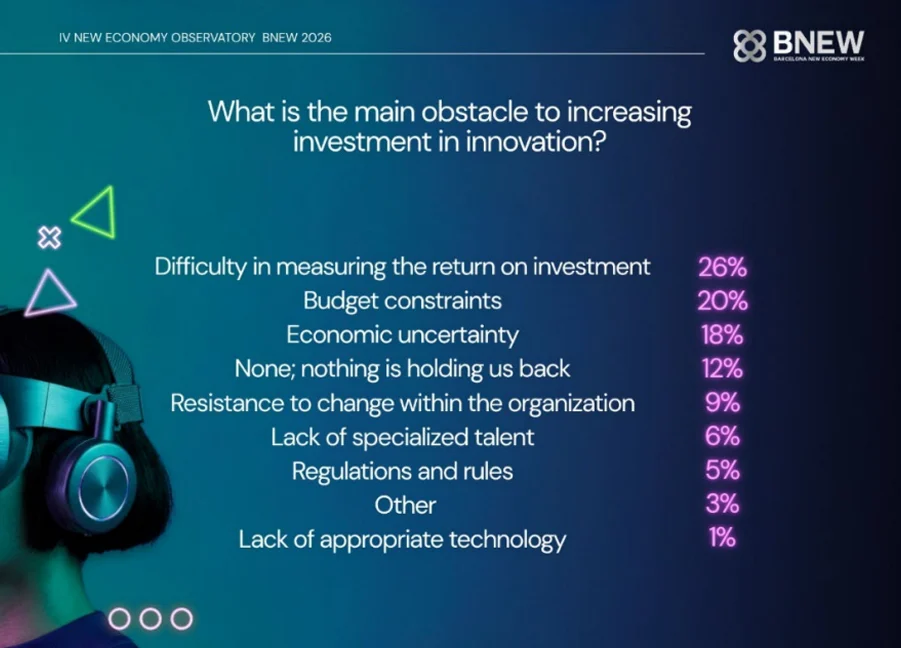
Regarding the main obstacles to increasing investment in innovation, respondents
highlighted the difficulty of measuring return on investment (ROI) (26%), budget constraints (20%), and economic uncertainty (18%) as the most significant challenges.

Optimistic and Collaborative Future
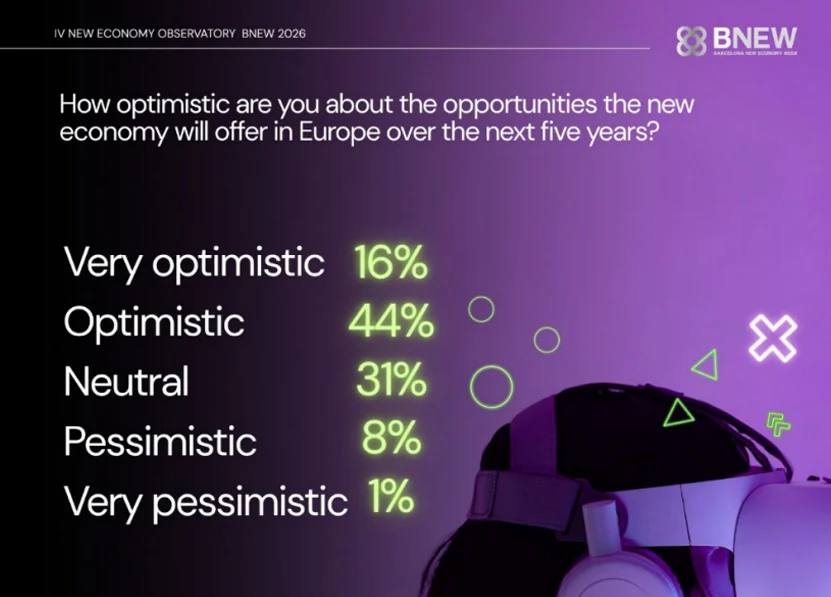
Overall, 60% of respondents are optimistic about the opportunities that the new economy will offer in Europe over the next five years, compared to 31% who hold a neutral view and 9% who express a pessimistic outlook.
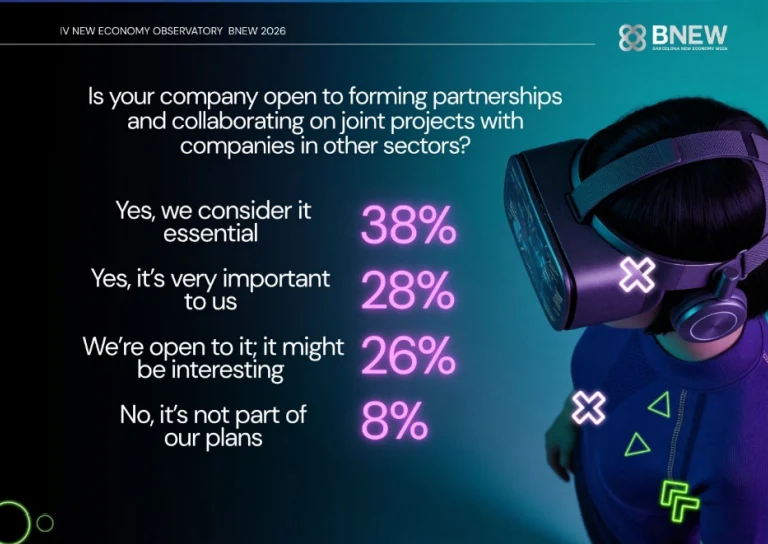
A large share of expectations is placed on collaboration, with 92% of companies open to forming partnerships with organizations from other sectors. More specifically, 66% consider such collaboration essential or very important, while 26% view it as an attractive opportunity. Only 8% do not contemplate it as part of their business plans.
More Startups
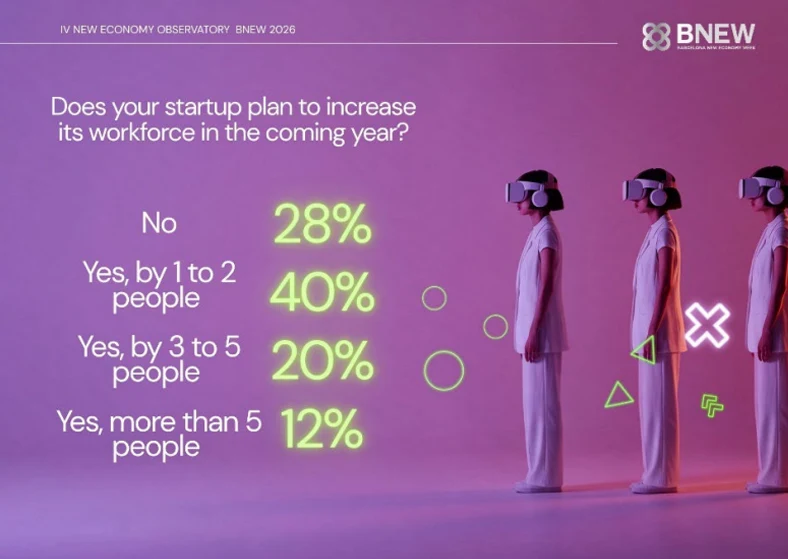
The outlook is also optimistic for emerging companies. 72% of the startups participating in the New Economy Observatory plan to increase their workforce over the next year. Of these, 40% consider it feasible to add one or two employees to their teams, 20% expect to hire between three and five people, and 12% anticipate expanding their workforce by more than five employees.
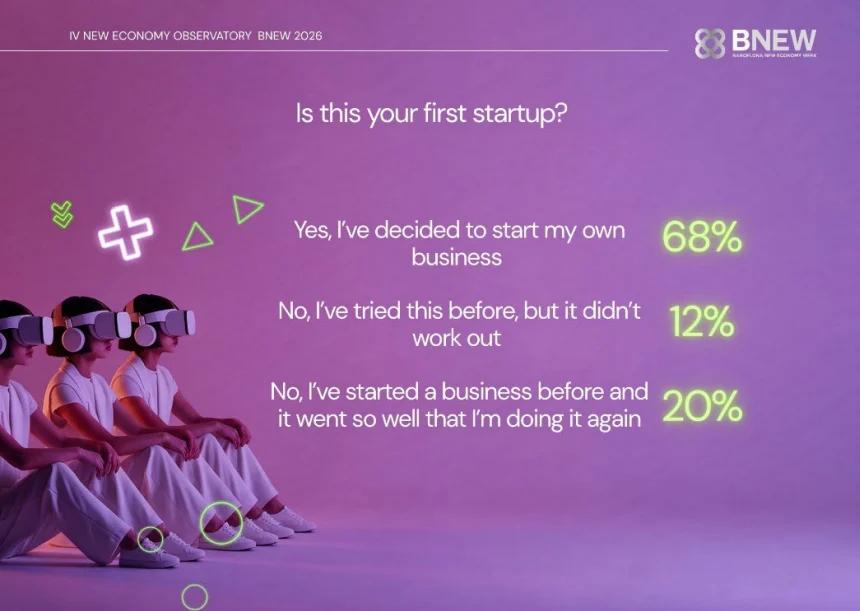
Finally, it is worth highlighting the continued interest in entrepreneurship. According to
the survey, 68% of respondents are working on the first venture launched by their
founders. Meanwhile, 20% are repeating the experience after achieving success with
previous startups, while 12% are trying again despite the fact that their earlier ventures did not achieve the expected results.
50 Sessions and 270 Speakers
The seventh edition of BNEW will feature three television studios, more than 50 debate sessions, and 270 speakers. The event will maintain its hybrid format, with all content streamed through its digital platform, while also enhancing in-person attendance through various networking spaces. In addition, the event will include a comprehensive program of more than 40 experiential activities, allowing visitors to enjoy a unique experience, discover the latest advancements in some of the industries leading the new economy, and explore part of the cultural, leisure, and design offerings of the Barcelona Metropolitan Area.
All of this will once again take place at DFactory Barcelona, the internationally
renowned Industry 4.0 ecosystem promoted by the Barcelona Free Zone Consortium (CZFB). Registration to access the platform and attend the event in person is now open through the BNEW
About the Consorci de la Zona Franca de Barcelona :

The Consorci de la Zona Franca de Barcelona is a public company that acts as a driver of technological and industrial development by supporting companies in their transition towards the digital era, because of CZFB’s strategic vision to lead Industry 4.0.
It promotes District 4.0 by driving the transformation of Industry 4.0 from the DFactory Barcelona technological ecosystem, champions innovation through the 3D Incubator and the Logistics 4.0 Incubator and connects the new economy and its key socioeconomic sectors. It organises congresses of economic interest for Barcelona, such as Spain’s and southern Europe’s largest logistics fair, SIL, as well as major flagship events in an innovative format such as Barcelona New Economy Week (BNEW) and Barcelona Woman Acceleration Week (BWAW).
Its plenary includes representatives from the Spanish government, the Generalitat of Catalonia, Barcelona City Council, and the city’s main economic institutions.
CZFB Can be contacted at :
FaceBook | Instagram | LinkedIn | X | YouTube | BKSY
Barcelona New Economy Week (BNEW 2026) can be contacted at :
LinkedIn | X | YouTube (1) | YouTube (2) | Instagram | Website
For more information:

Lluís López Yuste
Director – Departament de Comunicació
Department of Corporate Communication of CZFB
Av. del Parc Logístic, 2-10
Pol. Ind. Zona Franca – 08040 Barcelona
Lluís López Yuste can be contacted at :
LinkedIn | E-mail | Website | Tel: +34 609 358 475 | Tlf. 932 638 111
ABOUT Barcelona New Economy Week – BNEW 2026
Barcelona New Economy Week – BNEW is a physical and digital B2B event that gathers unique events of the sectors of AGROFOOD, AI, AVIATION & SPACE, ENERGY, GAMING, HEALTH, SCIENCE and TALENT. They all share a common denominator: New Economy.
BNEW 2026 Can be contacted at :
YouTube 1 | YouTube 2 | LinkedIn | Website | Twitter | YouTube Channel | Instagram
Earlier Articles :