
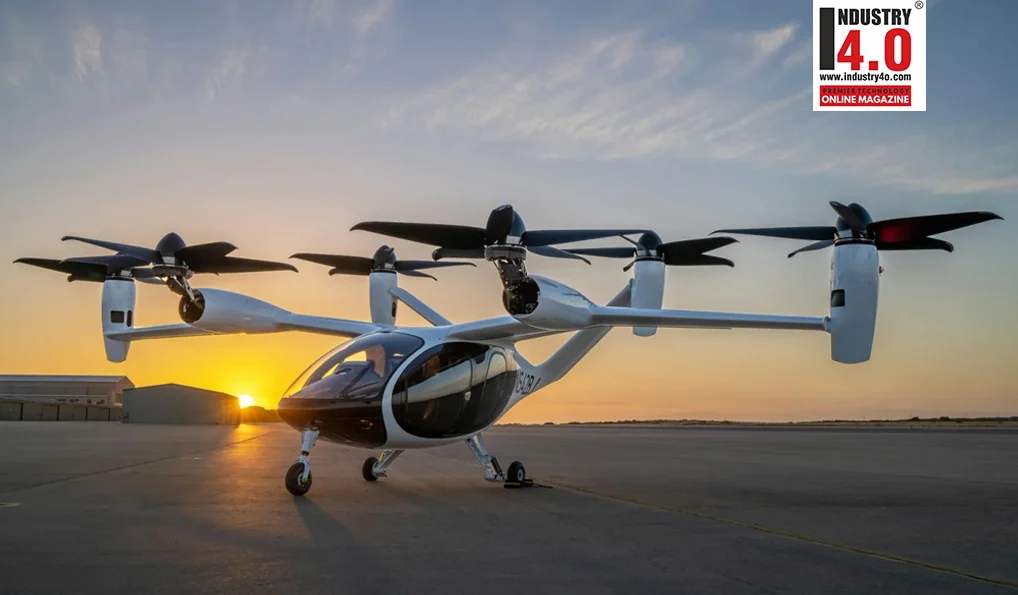
eVTOL ( Electric Vertical Take-Off and Landing )
Aircraft
EVTOL: Navigating Certifications, Air Mobility Regulations, and Battery Energy Density
As per Vertex Market Research, the eVTOL Aircraft Market is poised for significant growth during the next decade. Global eVTOL Aircraft market is projected to achieve a Compound Annual Growth Rate (CAGR) of approximately 30% during the forecast period from 2026 to 2035.
In 2025, worldwide eVTOL Aircraft Market stood at around US$ 600 Million. The Global eVTOL Aircraft Market size is projected to reach an estimated US$ 18 Billion by 2035. Vertex projects the eVTOL aircraft unit sales estimated to cross 4,000 – 5,000 units by 2035, up from around 250 unit sales deliveries recorded in 2025 (consisting primarily of uncrewed autonomous platforms and military evaluation prototypes).

eVTOL Aircraft Market is driven by several structural drivers such as growing urbanization and increasing traffic congestion, and the rising demand for clean, efficient, and sustainable transportation modes. Technological advancements in electric propulsion systems and battery technologies, coupled with growing consumer demand for fast, efficient, and flexible point-to point urban mobility, are accelerating the adoption of eVTOL platforms.
Additionally, increasing ongoing public-private investments, and strategic collaborations are fueling product development and deployment. The eVTOL aircraft market is also benefiting from a growing range of applications, from air taxis and urban shuttle services to emergency medical transport, private aviation, leisure air tours, and defense and logistics use cases. The integration of vertiports, electric charging infrastructure, and smart city mobility ecosystems is further catalyzing the commercial rollout of eVTOL aircraft globally.
The 2026 Freeze Point
 Many players within the eVTOL industry consider 2026 to be the crucial “freeze point” for eVTOL aircraft development. To meet intended 2027-28 launch dates, OEMs will need to firm up aircraft design and crucial technology decisions over the next twelve months. Future alterations to designs and technologies at a late stage of certification could compromise project timelines and costs significantly. Regulators are solidifying the certification standards and operational requirements for these new aircraft, and therefore manufactures have turned attention from aircraft design and development towards regulatory compliance, testing and certification, making 2026 a significant point for the transition.
The eVTOL regulation landscape is rapidly advancing as governments and aviation authorities work to implement clear paths for commercialization. In late 2025, Europe solidified its lead when EASA finalized certain components of its SC-VTOL certification scheme, offering aircraft manufacturers increased regulatory clarity during design and approval stages.
In March 2026, commercialization was pushed forward in the U.S. When the FAA selected six eVTOL companies including Joby and Archer to move forward into a second phase of its eIPP allowing pre-certified aircraft to begin operating in a controlled environment.
Increased global regulatory cooperation occurred in June 2026 when the FAA and EASA met to discuss the alignment of certification standards-a necessary precursor to allowing aircraft certified in one region to operate efficiently in another. China pushed its ambitions to lead advanced air mobility when revised civil aviation regulations will take effect in July 2026 mandating local governments to harmonize management of low-altitude air corridors and vertiports, ultimately promoting increased rollout speeds, reduced regulatory risks and greater opportunity for widespread eVTOL commercialization across the globe.
Battery Chemistry and Energy Density: The Key to eVTOL Scalability
Vertex states that the future growth of the eVTOL sector will be greatly determined by battery technology. Jet fuel provides a very high energy density, but current batteries offer a significantly lower energy density and therefore range, payload capacity and operational efficiency. One difficulty in operating eVTOL craft is that there are two distinct power requirements – one to provide a high power burst for landing, takeoff and hovering and another for sustainable, efficient flight (cruise flight). Conventional battery chemistries are unable to provide both a high power and energy density simultaneously, prompting eVTOL manufacturers to develop a combination of different battery chemistries, with one system used for landing, takeoff and hovering flight, and another used for cruise flight.
As per Vertex Market Research, the eVTOL technology road-map indicates a steady increase in battery energy densities; current aviation-grade lithium ion batteries achieve energy densities in the range 250-300Wh/kg and are capable of short-range operations. The arrival of semi-solid state and silicon-anode batteries with higher energy densities of 300-350Wh/kg are projected to deliver a 30-50% increase in range. Further ahead, solid-state and lithium-metal batteries with predicted energy densities exceeding 400-500Wh/kg may deliver substantial increases in flight range, higher payloads and improved economics. Overall, battery innovation should prove one of the most critical enablers for large-scale eVTOL commercialization and fleet development up to 2035.
 EVTOL Market Concentration and Competitive Landscape
As per Vertex, the Global eVTOL Aircraft Market is segmented based on System Component, Lift Design & Configuration, Propulsion Type, Mode of Operation, Range, Maximum Take-Off Weight (MTOW), and Application. By System Component, the market comprises Aerostructures & Interiors, Avionics, Batteries & Cells, Electric Motors & Engines, Software & Platforms, and Other Systems. Based on Lift Design & Configuration, it is categorized into Multirotor, Lift + Cruise, Vector Thrust, and Other Configurations. By Propulsion Type, the market includes Battery Electric, Hybrid Electric, and Hydrogen Electric aircraft.
Based on Mode of Operation, the market is segmented into Piloted, Semi-Autonomous, and Autonomous platforms, while Range is classified into Up to 200 km and Above 200 km. By MTOW, the market is divided into Up to 500 kg, 501–1,500 kg, and Above 1,500 kg aircraft. Based on Application, the market covers Air Taxis, Air Shuttles & Air Metros, Private Transport, Air Ambulance & Medical Emergency Services, Leisure & Recreational Flights, and Other Applications, reflecting the industry’s broadening commercial use cases.
Innovation and strategic alliances are rapidly reshaping the Global eVTOL Aircraft Market as firms strive to reach certification, develop scaled manufacturing, and commence commercial operations. Key participants include Archer Aviation, ARC Aero Systems, AutoFlight, BETA Technologies, EHang, Electra Aero, Eve Air Mobility, Jaunt Air Mobility, Joby Aviation, LIFT Aircraft, Manta Aircraft, Sarla Aviation, SkyDrive, The ePlane Company, Vertical Aerospace, Volant Aerotech, Wisk Aero, and XTI Aerospace, which are heavily investing in obtaining aircraft certifications, developing battery technology, enabling autonomous flight, scaling manufacturing processes and forging commercial ties with airlines, infrastructure companies, and mobility service operators. Investments and technology partnerships continue to define competition in this rapidly evolving sector as it moves from concept development to full commercial application.

In contrast, the market is extremely challenging, with multiple leading developers not able to keep on commercially developing its product for long term. Several eVTOL programs have been abandoned, suspended, or driven to bankruptcy because of lacking funding, delays in certification, technical complexities, or not clear commercial feasibility. There have been a number of setbacks such as Lilium, Volocopter, Overair, Supernal (Hyundai), Urban Air Mobility programs (Airbus), Nexus program (Textron), Urban Aeronautics and Kitty Hawk, which underscore the extensive funding required, regulatory complexities, and execution risks associated with bringing eVTOLs from concept to commercial operation.
About Vertex Market Research

Vertex Market Research is a trusted and reliable market intelligence and consulting firm headquartered in Australia, with research and sales operations across the United States and India. We deliver high-quality market insights, industry analysis, and customized research solutions that help businesses make informed strategic decisions.
Recognized as a reputable source for market research, Vertex Market Research is committed to accuracy, transparency, and data-driven excellence. Our team of experienced analysts and industry experts provides actionable intelligence across diverse sectors, empowering organizations worldwide to identify opportunities, mitigate risks, and achieve sustainable growth.
Vertex Market Research & Consulting (VMRC) is a one-stop destination for your all research requirements. We are a market intelligence and consulting firm with comprehensive experience and rich knowledge of the market research business intelligence, and advisory industry.
Vertex Market Research & Consulting (VMRC) has a vast repository of the latest market research reports, and top company profiles, along with the latest market statistics released by our dedicated industry experts. Our vast repository of research reports across various categories gives you a complete view of the ever-evolving trends and current topics worldwide.
At Vertex Market Research & Consulting (VMRC) the data bank is monitored by teams of subject matter experts which are validated by various statistical data and trending content.
Being a reliable market research company, Vertex Market Research & Consulting (VMRC) guarantee readers of reliable information based on the study of factual data of the past, and present scenarios of the market.
What Vertex Market Research & Consulting (VMRC) Do – Our Services :
Vertex helps clients make informed business decisions. Vertex offers market intelligence research ensuring relevant and fact-based research across a range of industries including chemicals, materials, energy, healthcare, and technology.
Vertex Market Research & Consulting (VMRC) to be Contacted at :
Mobile : +91-99750 17086 , WhatsApp : +91 – 99750 17086